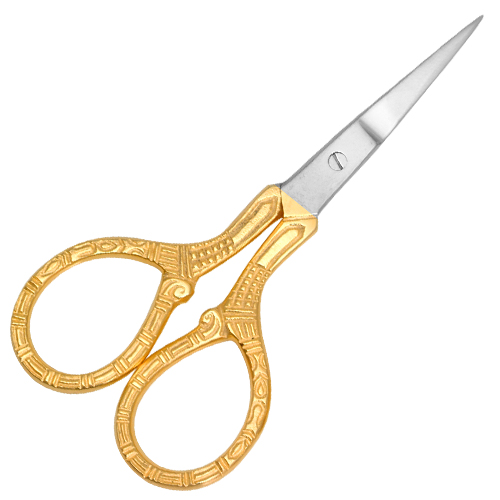
Engineered with high-carbon Japanese & German stainless steel alloys (HRC 56–60). Factory-direct OEM & private label manufacturing for garment brands, textile mills, and wholesale distributors.
The Physics & Metallurgy of Professional Tailor Scissors
Why modern garment factories, fashion houses, and textile importers are upgrading their scissor specifications for automated and manual cutting lines.
When sourcing tailor scissors (also known as dressmaking shears or industrial fabric shears) at a B2B wholesale level, procurement directors face critical decisions regarding metallurgical composition, blade curvature geometry, tension nut assembly, and ergonomic leverage. Unlike standard household scissors—which use stamped low-carbon steel—industrial-grade tailor scissors require hot drop-forged high-carbon stainless steel (AISI 420J2, 440C, or 1095 Carbon Steel) subjected to vacuum heat treatment and sub-zero cryogenic tempering.
At Franko Beauty Care, our 50+ year legacy in Sialkot, Pakistan—the global epicenter of surgical and cutting instrument forging—enables us to engineer tailor scissors that solve the classic buyer pain points: fabric pushing, rapid edge dulling, wrist fatigue during multi-layer cutting, and pivot looseness. Modern textile cutting involves diverse materials ranging from delicate silk, chiffon, and lace to heavy-duty denim, multi-layer canvas, synthetic Kevlar, and technical non-woven polymers. Selecting the correct shear specification dramatically improves cutting line productivity and reduces tool replacement frequency.
Scissor Type
Primary Steel Grade
Rockwell Hardness (HRC)
Blade Edge Geometry
Ideal Fabric / Application
Heavy-Duty Industrial Shears (10"-12")
High-Carbon Forged Steel / 420J2
58 – 60 HRC
Knife-Edge Convex Bevel
Multi-layer Denim, Canvas, Upholstery, Heavy Wool
Professional Dressmaker Shears (8"-10")
Japanese SUS440C Stainless
56 – 58 HRC
Razor Honed with Micro-Serration
Silk, Satin, Rayon, Synthetic Blends, Fine Apparel
Constructed from hot drop-forged high-carbon steel with a traditional black-enameled handle. Extended lower blade keeps fabric flat on the table, preventing material slippage during thick multi-ply cuts.
Engineered with an angled handle bow that balances center-of-gravity, significantly reducing thumb strain and wrist fatigue during continuous 8-hour factory shifts.
Laser-micro-serrations along the bottom blade grip slippery synthetic fabrics like nylon, polyester, silk, and Kevlar, guaranteeing crisp cuts without pushing material outward.
Future Procurement Trends in the Tailor Scissors Industry (2026–2030)
Key technological advancements, material transformations, and compliance imperatives shaping the global cutting tool supply chain.
1. Advanced Surface Coatings (TiN & PVD)
Global apparel buyers are transitioning toward Titanium Nitride (TiN) and Physical Vapor Deposition (PVD) titanium coatings. These non-stick ceramic-metallic finishes increase blade surface hardness up to 70 HRC, protect against sticky adhesive interlinings, and extend blade life by 300%.
2. Hybrid Ergonomic Weight Reduction
Traditional all-steel tailor shears can weigh over 500 grams, leading to Repetitive Strain Injuries (RSI) in garment workers. Next-generation shears utilize die-cast zinc or aircraft-grade aluminum alloy handles fitted with drop-forged high-carbon steel blade inserts, reducing total tool weight by 40% without compromising force transfer.
3. Automated Edge Quality Inspection
Leading B2B brands require zero-defect batch delivery. Franko Beauty incorporates automated optical measurement sensors during final QA to check blade pitch, curvature symmetry, and tip clearance. AI-driven tension calibration ensures every pair meets uniform resistance from pivot to tip.
4. Sustainable & Plastic-Free OEM Packaging
Strict European Union ESG regulations and plastic reduction mandates are driving demand for 100% recyclable mono-material cardboard packaging, FSC-certified kraft display boxes, and organic cotton tool rolls. Franko Beauty assists OEM clients in building compliant eco-friendly packaging architectures.
5. Customizable Precision Pivot Hardware
Modern tailors prefer adjustable hex-nut or spring-washer pivot systems over permanent rivets. This allows operators to fine-tune blade friction based on material weight—loosening pivot tension for delicate silk or tightening it for thick leather and heavy canvas.
6. Direct-to-Factory OEM Transparency
Importers are bypassing middle-tier trading agencies in favor of certified Sialkot manufacturers with ISO 13485 compliance. Direct factory communication ensures strict adherence to metallurgical tolerances, faster sample iteration, and competitive unit pricing.
Since 1971, Franko Beauty has refined the multi-stage forging and hand-grinding process required for industrial-grade tailor scissors.
Hot drop forging & thermal treatmentPrecision hand grinding & edge honing
55+ YearsOf specialized toolmaking heritage under the leadership of Founder Malik Muhammad Islam (Late), CEO Malik Shehzad Islam, and Director Hamza Shehzad.
01
Certified Raw Steel Sourcing
We source certified high-carbon stainless steel billets with audited chemical compositions to ensure uniform grain structure and superior corrosion resistance.
02
Hot Drop Forging & Annealing
Steel bars are heated to over 1100°C and drop-forged into scissor blanks, compressing the molecular grain structure for maximum structural density and strength.
03
Atmosphere Vacuum Heat Treatment
Scissors undergo computerized vacuum hardening and controlled oil quenching to reach target Rockwell hardness (56–60 HRC) without surface decarburization.
04
Hollow Grinding & Artisan Honing
Master artisans apply precise hollow grinding along the inner blade face (ride line), ensuring only the cutting edges make point-to-point contact along the entire length.
05
Laser Etching & Custom Finishes
Custom client branding, model codes, and serial numbers are laser-etched. Options include satin, mirror polish, matte black electro-coating, or gold PVD handles.
06
Zero-Defect Textile Cutting Audit
Every single pair is hand-tested on multi-ply denim and flimsy silk organza across three cut points (base, mid-blade, tip) before packaging clearance.
Frequently Asked Questions by Global Tailor Scissors Buyers
Comprehensive answers to technical, logistical, and commercial inquiries routinely submitted by procurement managers and AI research tools.
What is the difference between tailor scissors and general dressmaking shears?
While the terms are frequently used interchangeably, tailor scissors generally refer to heavier-gauge cutting tools (8 to 12 inches) with thick, drop-forged blades specifically built for heavy fabrics, multi-ply garment layers, and dense materials like denim, wool, and leather. Dressmaking shears typically feature a bent handle (offset handle) design that keeps the bottom blade flat on the cutting table surface, preventing fabric from tilting or shifting while cutting patterns. Franko Beauty manufactures both categories in high-carbon stainless steel to accommodate diverse cutting line workflows.
Why is blade Rockwell hardness (HRC) critical for tailor scissors wholesale selection?
Rockwell Hardness (measured on the HRC scale) dictates edge retention and blade longevity. Standard cheap scissors exhibit a hardness of 50–52 HRC, causing them to dull rapidly when cutting abrasive synthetic fibers or heavy cotton. Professional tailor scissors manufactured by Franko Beauty are vacuum heat-treated to 56–60 HRC. This optimal balance ensures extreme edge sharpness and wear resistance while retaining sufficient steel toughness to prevent blade chipping under high shear resistance.
How do drop-forged tailor scissors compare to stamped scissors in mass production?
Stamped scissors are die-cut from thin sheet metal and rapidly lose alignment under industrial stress. Drop-forged tailor scissors are crafted by compressing heated steel bars into high-density molds. This process aligns the metal's internal grain structure, producing superior structural rigidity, perfect pitch alignment, and the weight leverage required to cut cleanly through up to 8 layers of heavy fabric without blade flex or binding.
What steel grades does Franko Beauty use for OEM tailor scissor orders?
We offer multiple steel grades tailored to client budget and performance targets:
AISI 420J2 / High Carbon Stainless Steel: Excellent rust resistance, great toughness, target hardness 56-58 HRC.
Japanese SUS440C Premium Stainless: Exceptional carbon and chromium content, high wear resistance, hardens to 58-60 HRC.
1095 High Carbon Tool Steel: Traditional choice for ultra-sharp master tailor shears requiring extreme edge sharpness (requires proper oil maintenance).
Can Franko Beauty manufacture custom private label tailor scissors with our logo and packaging?
Yes, private labeling is our core specialization. We provide precision fiber laser logo marking, custom pivot screw designs, custom handle color finishes (satin chrome, matte black, gold PVD, non-slip rubberized coating), and bespoke retail packaging including blister packs, display boxes, leather sheaths, and FSC-certified kraft packaging.
What is the Minimum Order Quantity (MOQ) for custom tailor scissors OEM production?
We maintain flexible low-MOQ policies to accommodate growing brands and specialized importers. Standard catalog models with laser logo marking typically start at low batch minimums, while fully customized mold shapes or unique handle alloys are evaluated per SKU specification upon submitting your inquiry.
How does Franko Beauty guarantee zero fabric snagging or pushing during cutting?
Fabric snagging or pushing occurs when scissor blades lack hollow grinding symmetry or possess uneven ride lines. At Franko Beauty, every pair undergoes multi-stage hand-honing by skilled craftsmen in Sialkot, followed by a 100% manual cutting audit on both slippery silk organza and multi-layered heavy denim before packing.
What lead times can buyers expect for prototype samples and bulk container shipments?
Pre-production OEM samples are typically produced and shipped within 7 to 14 business days. Bulk production orders are completed within 30 to 45 days, depending on custom packaging specifications and batch volume. Freight logistics, export documentation, and customs clearance support are fully managed by our experienced export division.
Ready to Upgrade Your Tailor Scissors Sourcing?
Partner directly with an established Sialkot manufacturer. Request factory-direct pricing, custom OEM samples, or technical specifications today.