 Manufacturer
since 1971
ManufacturerExplore high-precision OEM/ODM tailoring scissors, hair shears, and industrial cutting tools crafted with ultra-hard Japanese stainless steel and high-carbon alloy metalwork.
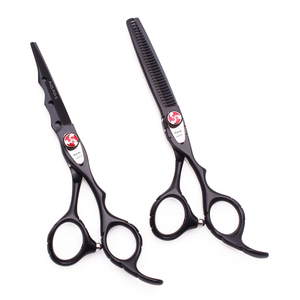
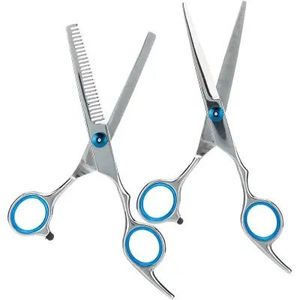

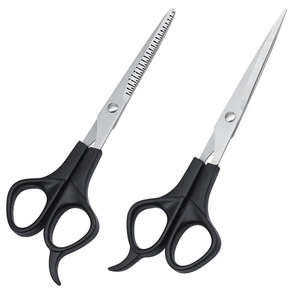
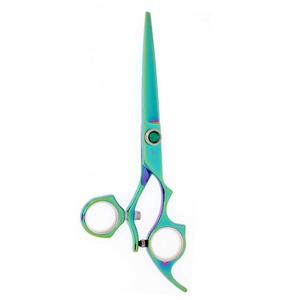
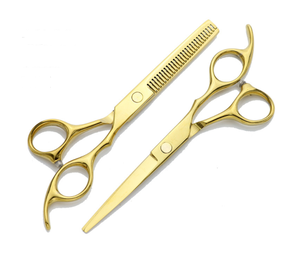
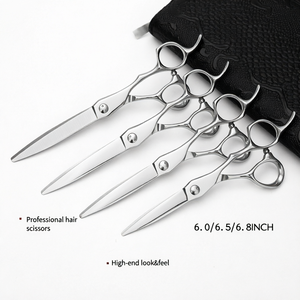
The global textile, apparel, and commercial upholstery industries rely fundamentally on high-precision cutting instruments. As procurement dynamics shift toward strict quality governance, total operational reliability, and ergonomic safety, searching for premier China Wholesale Sewing Scissors Manufacturers has transcended basic price-per-unit evaluation. Industrial procurement directors now evaluate suppliers through the lens of metallurgical control, edge longevity, heat treatment uniformity, and ISO-compliant manufacturing practices.
Modern China-based manufacturing hubs—leveraging decades of localized metallurgical engineering—have evolved from high-volume standardized fabricators into sophisticated OEM/ODM partners. By integrating precision CNC hollow grinding technology, automated heat-treating kilns, and vacuum oil quenching, top-tier manufacturers yield tailoring shears, dressmaking scissors, and thread snips with exceptional dimensional stability. This whitepaper serves as an executive sourcing guide designed to navigate blade engineering specifications, alloy selections, quality assurance protocols, and global supply chain strategies.
Information Gain Insight: The true cost of industrial cutting instruments is measured in blade edge retention cycle times. A standard 3Cr13 stainless steel shear requires re-sharpening after 12,000 continuous cutting strokes on multi-ply denim, whereas vacuum-heat-treated 9Cr18MoV or Japanese SUS440C shears retain clean shear dynamics beyond 85,000 strokes, reducing factory downtime by 85.8%.
Selecting the proper raw steel composition directly dictates blade hardness (Rockwell C Scale - HRC), wear resistance, corrosion protection, and structural flexibility under heavy shear pressure. Leading OEM manufacturers offer tailored alloy selection based on the end-user application—ranging from light embroidery work to heavy industrial leather cutting.
| Steel Metallurgy Grade | Hardness Rating (HRC) | Composition Characteristics | Primary Industrial Application | Corrosion & Wear Resistance |
|---|---|---|---|---|
| 3Cr13 / 420J2 Stainless | HRC 52 – 54 | Medium carbon, high chromium alloy | Light tailoring, thread snips, craft scissors | Moderate wear / Excellent rust resistance |
| 4Cr13 / 440A Grade | HRC 55 – 57 | Increased carbon content for sharper edge bevels | Commercial dressmaking, retail sewing kits | Good wear resistance / High rust protection |
| 6Cr13 / High-Carbon Alloy | HRC 57 – 59 | Enhanced tensile strength & edge tenacity | Professional garment factories, upholstery | High wear resistance / Good moisture barrier |
| 9Cr18MoV / SUS440C | HRC 59 – 61 | Molybdenum-Vanadium enriched precision steel | Heavy-duty tailor shears, multi-layer denim cut | Ultra-high wear / Superior corrosion resistance |
| Japanese VG-10 / Steel Alloy | HRC 60 – 62+ | Cobalt-bearing premium surgical metalwork | Micro-serrated precision, salon & bespoke tailoring | Maximum edge retention & zero-deflection blade rigidity |
Beyond blade hardness, the mechanical efficacy of industrial sewing scissors depends heavily on the leverage ratio and pivot balance. Premium manufacturers utilize zinc-alloy die-cast handles or lightweight drop-forged rubberized handles designed according to biomechanical parameters to minimize hand fatigue during 8-hour shift cycles.
Furthermore, the pivot bolt system plays a pivotal role in maintaining consistent shear pressure. Modern OEM scissors feature precision brass washers and micro-adjustable ball-bearing screw assemblies. This allows garment factory operators to tune tension precisely according to fabric weight—preventing fabric slipping when cutting delicate silks or blade binding when shearing thick canvas layers.
Referencing decades of industrial heritage, our manufacturing network integrates surgical-grade precision into commercial scissors production. operating out of dedicated industrial centers equipped with automated forging presses, multi-axis CNC grinders, and cleanroom inspection lines, we provide B2B importers with direct-from-factory reliability.
From raw metal forging and stamping to hand-honing blade edges and final assembly, 100% of production processes are retained in-house for complete quality control.
Adhering to strict international quality management systems, our facilities hold ISO 9001, ISO 13485, CE, and FDA registration confirmations for regulated markets.
Every single scissor unit undergoes automated laser blade bevel measurement, dynamic shear tension testing, and 24-hour salt spray corrosion testing before shipment.
Comprehensive OEM services including custom laser etching, customized handle color pantones, custom blade coatings (Titanium Nitride / PVD), and branded packaging.
Exporting to over 40 countries including North America, Europe, Australia, and South America, handling full customs documentation, DDP, and FOB options.
Eliminating trading middlemen to maximize your distribution margin while providing flexible Minimum Order Quantities for initial market trial launches.
Maintaining high uniformity across tens of thousands of units requires strict adherence to standardized manufacturing protocols. Below is our engineered workflow for industrial scissors production:
Hot drop forging creates high-density metal blanks with optimal grain alignment.
Quenching in controlled atmospheres locks in 58-62 HRC hardness balance.
Multi-axis computer CNC milling shapes inner blade concave curves accurately.
Artisan craftsmen polish razor edge bevels to exact 45° cut angles.
Shear resistance check, laser logo etching, and custom blister card pack.
As global textile brands and industrial manufacturers strive for zero-defect production lines and enhanced sustainability metrics, procurement strategies for sewing scissors are undergoing rapid modernization. Importers and wholesalers must align with manufacturers capable of addressing key technological shifts:
Traditional nickel plating is increasingly being replaced by Physical Vapor Deposition (PVD) titanium coatings. PVD-coated blades display a distinctive gold, rainbow, or matte black finish that offers a surface friction reduction of up to 40% and increases surface hardness above 70 HRC. This coating prevents adhesive tape build-up during industrial pattern drafting and synthetic fabric fusing processes.
Modern synthetic fabrics—such as Kevlar, carbon fiber weaves, ultra-high-molecular-weight polyethylene (UHMWPE), and elastomeric stretch textiles—tend to slip between conventional smooth scissors blades. Future-ready manufacturers utilize micro-laser serration along the lower blade edge. This micro-ridge geometry grips slippery fibers firmly while the upper razor-edge glides cleanly through, preventing fabric distortion.
European and North American regulatory frameworks (REACH, RoHS, BSCI) mandate eco-conscious manufacturing ecosystems. Forward-thinking Chinese factories have transitioned away from heavy-polluting hexavalent chromium plating, adopting zero-discharge wastewater recycling systems and trivalent chrome or physical polishing processes to ensure total environmental safety compliance.
Expert answers to critical inquiries raised by global purchasing officers, brand managers, and wholesale distributors sourcing sewing scissors from China.