China Top Comedone Extractors Manufacturers & Factories

Global B2B Procurement White Paper: Engineering Standards, OEM Supply Chains & Metallurgical Precision

Precision Beauty & Extraction Instruments

Explore our industrial-grade, ISO 13485-certified OEM catalog engineered for global distributors, medical brands, and professional chains.
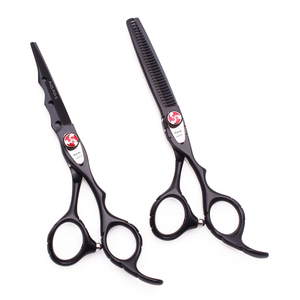

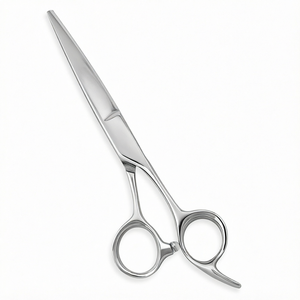
Professional Hair Scissors AQIABI Japanese Steel

Professional Hair Scissors 6" AQIABI Japanese Steel Hair Cutting Shears Set A1019

Send an Inquiry
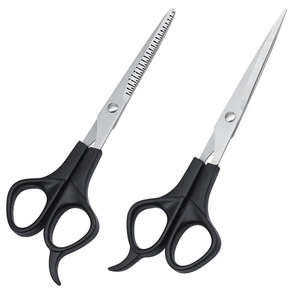
Professional Haircut Thinning Scissors

Professional Haircut Thinning Scissors Salon Hairdressing Shears Flat Teeth Barber Scissor

Send an Inquiry
CHAOBA Professional Stainless Steel Scissors

CHAOBA Professional Stainless Steel Sharp Hair Scissors 6 Inch Barber Shears with Long Handle

Send an Inquiry
Professional Hair Cutting Scissors Set

Professional Hair Cutting Scissors Set Sharp Salon Stylist Hair Thinning Shears Beauty Care

Send an Inquiry
Morje Surgical Professional Hairdressing Scissors

Morje Surgical Professional Hairdressing Scissors Stainless Steel Sharp Blade 28 Teeth

Send an Inquiry
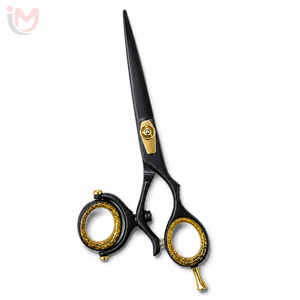
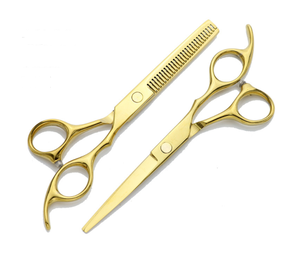
Stainless Steel Scissors with Gold Accents

Professional Stainless Steel Hair Scissors with Gold Accents Salon Right Handed OEM Services

Send an Inquiry
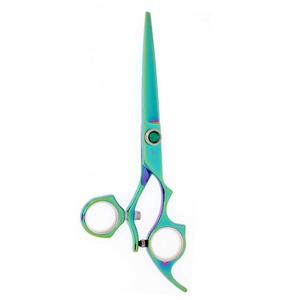
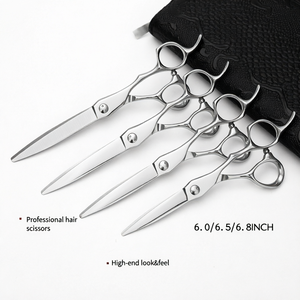
Advanced Barber Hair Cutting Scissors

Advanced Barber Hair Cutting Scissors High Quality Precision Shears Grooming Services

Send an Inquiry
Factory Price Hair Scissors Set 4-Pieces

Factory Price High Quality Professional Hair Scissors Set 4-Pieces Blunt Tip 28 Teeth

Send an Inquiry
53+
Years Manufacturing (Est. 1971)
ISO 13485
Medical Management Standard
40+
Global Export Destinations
AQL 1.0
Precision Quality Guarantee

Executive Industry Analysis: The Evolution of Asian Metallurgical Hubs & Skin Tool Manufacturing

The global dermatological and personal grooming instrument market has undergone a paradigm shift over the past decade. Driven by heightened consumer awareness regarding facial hygiene, clinical skincare, and non-invasive dermatological procedures, demand for professional comedone extractors, extraction sets, and surgical-grade facial care tools has surged exponentially. Within this landscape, China and specialized manufacturing clusters across Asia have solidified their positions as world leaders in high-precision stainless steel instrument fabrication.

Historically relied upon for mass-market production, Chinese comedone extractor manufacturers have executed a comprehensive technical upgrade. Today’s top-tier facilities combine advanced metallurgical forging, automated computer-numerical-control (CNC) wire-cutting, ultrasonic surface passivation, and microscopic hand-inspection to manufacture tools that meet stringent international healthcare criteria. Importers, OEM procurement managers, and beauty brand executives seeking reliable factory partners must evaluate prospective vendors not merely on price per unit, but on metallurgical consistency, biological safety compliance, ergonomic design validation, and multi-market regulatory accreditation.

Information Gain Insight: Grade 420J2 and 316L surgical stainless steels represent the baseline threshold for professional dermatological tools. Sub-standard carbon steels lack passivated oxide layers, leading to micro-corrosion upon chemical sterilization—a critical failure point for professional spa and clinical supply chains.

1. Metallurgical Standards and Material Selection Criteria

Comedone extractors operate under concentrated mechanical force applied directly to delicate dermal surfaces. Consequently, material selection directly impacts instrument efficacy, safety, and lifespan. Leading Chinese factories utilize specific stainless steel alloys optimized for micro-tooling:

  • Martensitic Stainless Steel (AISI 420/420J2): Renowned for exceptional tensile strength and post-heat-treatment hardness (HRC 48-52). Ideal for ultra-sharp lancets, precision curved tweezers, and thin-wire comedone loops requiring minimal flex under lateral pressure.
  • Austenitic Stainless Steel (AISI 316L): Containing higher nickel and molybdenum content, 316L provides superior resistance against aggressive chemical disinfectants, autoclaving, and saline exposure. Typically specified for premium medical-grade extraction loops and clinical dermatological sets.
  • Biocompatible Titanium Coatings (PVD Plasma Deposition): Modern factory lines integrate Physical Vapor Deposition (PVD) to coat stainless substrates with Titanium Nitride (Gold), Titanium Carbonitride (Rose Gold), or Diamond-Like Carbon (DLC Matte Black). Beyond aesthetics, PVD coatings increase surface hardness by up to 300% and reduce nickel leaching to zero.

2. Mechanical Engineering & Geometrical Precision of Extraction Loops

The mechanical efficiency of a comedone extractor depends on loop angle, edge radius, and pressure distribution mechanics. Sub-par manufacturing results in sharp internal wire edges that cause epidermic tearing, scarring, or localized tissue necrosis. High-precision Chinese facilities employ custom micro-milling processes to achieve optimum geometries:

  • Flat Wire vs. Round Wire Loops: Flat-pressed wire loops distribute gentle, even hydraulic pressure across the perifollicular tissue, pressing sebum out without pinching skin. Round-wire loops excel at concentrated extraction of deep-seated blackheads.
  • Angled Beveling (45° & 90° Offset): Ergonomic handle-to-loop angles allow clinical aesthetician access to nasal folds and auricular contours without exerting awkward wrist strain.
  • Micro-Needle Lancets: Triple-ground, ultra-fine tips engineered to puncture micro-comedones cleanly, reducing lesion recovery time by over 40% compared to standard stamped lancets.

Factory OEM Capabilities & Enterprise Superiority

Leveraging over 50 years of heritage, our advanced manufacturing infrastructure bridges historical metallurgical craft with automated quality control.

⚙️

In-House Forging & CNC Machining

Complete control over raw steel forging, precision wire shaping, and CNC grinding eliminates subcontractor variance, ensuring identical dimensional tolerances across 100,000+ unit batches.

🛡️

Medical-Grade Passivation

Automated ultrasonic cleaning and nitric-acid passivation bath treatments remove free iron contamination, preventing rust and enabling resistance against thousands of autoclave cycles.

🏷️

Turnkey Private Label Engineering

From fiber laser logo engraving to custom molded EVA zip cases, blister cards, and eco-friendly FSC-certified box packaging, we deliver shelf-ready retail packages tailored to your brand standards.

📋

ISO 13485 & Regulatory Compliance

Operating under ISO 13485:2016 Quality Management Systems, our production line complies with EU Medical Device Regulations (MDR), CE mark parameters, and US FDA registration standards.

🔬

Multi-Stage AQL Inspection

Every lot undergoes 100% optical magnification checks for tip alignment, loop smooth-finish validation, and hardness testing (HRC scale) prior to export packaging approval.

🌐

Global Logistics & Export Reach

Established freight partnerships across 40+ countries guarantee seamlessly cleared DDP, FOB, or CIF international shipments supported by complete Certificate of Analysis (CoA) documentation.

Future B2B Procurement Trends for Comedone Extractors (2026–2030)

As the international beauty market matures, procurement managers must align their supply chain strategies with emerging regulatory standards, consumer expectations, and technology integration. B2B buyers sourcing comedone extractors and specialized skincare tools from China must prepare for four critical structural trends:

1. Environmental Compliance & European Packaging Directive Alignment

Single-use plastic blister packs are rapidly being phased out across Northern European and North American retail markets. Global buyers now demand 100% plastic-free packaging, recyclable aluminum travel tubes, or FSC-certified paperboard presentation boxes. Manufacturers in China with established eco-packaging supply chains hold a distinct advantage for brands aiming to comply with upcoming EU Packaging and Packaging Waste Regulation (PPWR) updates.

2. Demand for Antibacterial & Medical-Grade Surface Coatings

Post-pandemic sanitation expectations have pushed skincare tool innovation beyond bare stainless steel. The market is shifting towards permanent antibacterial physical vapor deposition (PVD) treatments, including copper-ion infused coatings and antimicrobial matte ceramic finishes. These innovations prevent microbial cross-contamination when tools are stored in humid bathroom environments or shared spa stations.

3. Integration of Smart Diagnostic & Micro-Camera Extraction Tooling

The convergence of consumer electronics and classical dermatological tools has birthed the "Smart Extractor" category—tools outfitted with 1080p high-definition micro-cameras, LED ring lights, and Wi-Fi video streaming capabilities. High-end China manufacturers are expanding their R&D divisions to offer hybrid ODM solutions combining medical-grade metal tips with micro-electronic assemblies.

4. Supply Chain Traceability & ESG Auditing Rigor

Tier-1 retail brands require complete supply chain transparency. Sourcing decisions now hinge on comprehensive ESG (Environmental, Social, and Governance) audits, SA8000 social accountability certifications, and verifiable raw material origin certificates. Buyers are shifting away from small workshops toward fully compliant, medium-to-large-scale audited factories equipped with solar power integration and closed-loop water treatment plants.

Technical Evolution & Product Development Trajectories

Analyzing patents, ergonomic studies, and consumer return telemetry reveals key engineering trends shaping next-generation comedone extraction products:

Ergonomic Knurling & Weight Distribution

Traditional thin-wire handles induce finger fatigue during extended clinical sessions. Modern tools utilize hollowed, diamond-knurled 8mm-10mm diameter handles that offer optimal tactile feedback and center-of-gravity balance.

Dual-Head Modular Versatility

To optimize SKU shipping efficiency, dual-ended extraction tools combining a micro-lancet on one side and an angled wire loop on the reverse dominate B2B catalog sales, replacing single-purpose implements.

Furthermore, advanced surface treatment facilities are implementing non-glare satin finishes for clinical surgical lighting conditions. High-intensity LED lighting in operating rooms and aesthetics clinics reflects off mirror-polished steel, causing optical strain. Satin-finished, bead-blasted stainless steel solves this issue, gaining strong traction among clinical procurement officers.

Comprehensive B2B Procurement FAQ

Answers to essential technical, regulatory, and supply chain questions from global buyers and OEM partners.

What stainless steel grades are recommended for professional-grade comedone extractors?
For professional clinical and dermatological tools, AISI 420J2 (martensitic stainless steel) is the industry standard due to its high hardness (HRC 48-52) and edge retention for micro-lancets. AISI 316L (austenitic stainless steel) is preferred for high-corrosion environments and frequent autoclave sterilization. We advise avoiding 200-series carbon steel, as it rusts quickly after exposure to disinfectants.
What is your typical Minimum Order Quantity (MOQ) for OEM/Private Label orders?
Our standard MOQ for stock items with custom laser-engraved logos is 500 units per SKU. For fully custom tooling, specialized PVD color coatings (such as Rose Gold or Titanium Black), or custom-molded retail packaging, the typical MOQ ranges between 2,000 and 5,000 units depending on technical specifications.
Which international quality and medical certifications do your factories hold?
Our manufacturing facilities are certified under ISO 13485:2016 for Medical Devices Quality Management Systems. Our products comply with European Medical Device Regulation (EU MDR 2017/745), carry the CE Mark, hold FDA registration confirmation for the US market, and comply with REACH/RoHS chemical safety standards.
How do you ensure loop edges do not cause skin micro-tears?
Every extraction loop undergoes automated micro-milling followed by electro-polishing and multi-stage manual felt-wheel buffing. Furthermore, 100% of finished lots pass optical magnification inspection under 20x optical zoom to verify that wire edges are radius-smooth, eliminating burrs or sharp inner corners.
What custom packaging options do you offer for retail-ready distribution?
We provide end-to-end packaging engineering. Options include FSC-certified paperboard slide boxes, eco-friendly tinplate cases, custom EVA zip travel pouches, PU leather sleeves, and traditional blister cards. We also supply retail-ready point-of-sale (POS) counter display cartons.
What is the lead time for custom sample creation and mass production?
Pre-production samples with custom laser-etched branding are dispatched within 5 to 7 business days. Fully custom mold creation takes 15 to 20 days. Once samples are approved, standard mass production lead time is 25 to 35 calendar days, depending on batch volume and packaging complexity.
How do you handle Quality Control (QC) and Acceptable Quality Limits (AQL)?
We operate strict AQL 1.0 Major / 2.5 Minor inspection standards based on ISO 2859-1 sampling protocols. QC checks occur across five distinct stages: Raw material spectral analysis, post-forging dimensional checks, heat-treatment hardness verification, post-polishing surface checks, and final pre-box count audit.
Can your factory assist with DDP shipping directly to Amazon FBA or regional warehouses?
Yes. Our experienced export logistics team handles full Delivered Duty Paid (DDP) shipments worldwide, including air freight, sea freight, and express courier lines. We manage export customs clearance, pay import tariffs, and ensure compliance with Amazon FBA carton labeling and palletization guidelines.

Partner with China's Premier Instrument Factory

Connect directly with our engineering team to review technical drawings, request factory-direct sample kits, or obtain a comprehensive OEM quote within 24 hours.

Send an Inquiry