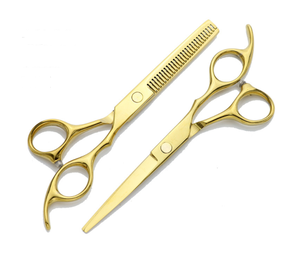
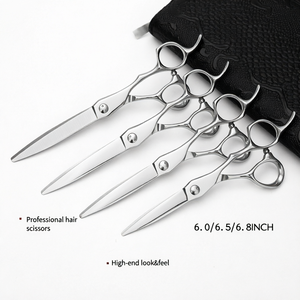
1. Strategic Overview: Sourcing Shavette Razors & Barber Tools from China
The global commercial wet shaving and professional barbering market is undergoing a structural expansion driven by the modern resurgence of artisan barbershops, consumer demand for traditional wet shaving experiences, and stringent sanitation regulations in commercial salons. Shavette razors—also known as straight razors with replaceable disposable blades—have emerged as the definitive hygiene standard for professional master barbers worldwide.
Unlike traditional fixed-blade straight razors that require labor-intensive honing and stropping (which risk cross-contamination between clients), shavettes utilize single-use half double-edge or single-edge blades. This mechanism guarantees 100% compliance with global health board standards while delivering the surgical precision, balance, and tactile feedback demanded by professional hair stylists and shave masters.
Information Gain Insight: Sourcing directly from top-tier Chinese original equipment manufacturers (OEMs) provides brand owners, beauty conglomerates, and medical-grade beauty tool importers with a structural cost efficiency ratio of up to 45% compared to European assembly hubs, without sacrificing metallurgical integrity or ergonomic precision.
When selecting a manufacturing partner for shavette razors in China, procurement teams must evaluate key variables beyond unit price. Blade retention geometry, arm balance, hinge friction stability, corrosion resistance, and material grade (304 vs 316L vs 440C stainless steel) dictate brand performance and long-term customer retention.
2. Technical Development Trends: Metallurgy, Locking Mechanisms & Ergonomic Engineering
The evolution of shavette manufacturing in China has transitioned from basic stamped metal plates to high-precision micro-CNC milling, metal injection molding (MIM), and advanced vacuum physical vapor deposition (PVD) coating technologies. Understanding these engineering developments is vital for buyers developing private-label product lines.
2.1 Metallurgical Breakdown & Alloy Performance
The longevity and tactile balance of a professional shavette rely heavily on the blade arm and handle composition. Below is an engineering comparison of primary raw materials utilized by premier Chinese manufacturers:
| Steel Grade / Material |
Hardness (HRC) |
Corrosion Resistance |
Weight Distribution |
Primary Commercial Application |
| 316L Marine Stainless Steel |
25 - 30 HRC |
Exceptional (High Salt & Moisture) |
Medium - Heavy |
Premium Professional Shavettes (Autoclavable) |
| 304 Austenitic Stainless Steel |
20 - 25 HRC |
High (Standard Salon Use) |
Medium |
Commercial OEM Volume Lines |
| 440C High-Carbon Stainless Steel |
58 - 60 HRC |
Moderate to High |
Optimal Edge Hold |
Hybrid Razor Blades & Integrated Shear Inserts |
| Anodized Aircraft Aluminum |
12 - 15 HRC |
High (Chemical Resistant) |
Ultra-Lightweight |
Ergonomic Speed Shavettes & Precision Trimmers |
| Zinc Alloy (Die-Cast) |
15 - 20 HRC |
Moderate (Requires Plating) |
Heavy Balance |
Entry-Level Retail & Promotional Kits |
2.2 Advanced Blade Locking Mechanisms
The core structural element of any shavette razor is its blade insertion and retention mechanism. Chinese engineering innovations have standardized four distinct holding systems:
- Swing-Lock / Clasp System: Features a dual-hinged arm that swings open to insert half-blades. Secured via an outer locking clip. Provides maximum blade stability during heavy-beard lining.
- Slide-Lock Mechanism: Utilizes a precision-engineered internal sleeve that slides out of the main blade holder. Enables rapid blade replacement in high-volume barbering environments while maintaining razor-thin profile tolerances.
- Insert Cartridge / Push System: Employs a polymer or stainless insert tray that snaps directly into the razor head. Popularized by modern ergonomics for protecting fingers during blade insertion.
- Magnetic Retention System: Integrates high-strength Neodymium (NdFeB) micro-magnets into the inner blade chamber, keeping single-edge blades perfectly parallel during clasp closure.
2.3 Surface Coatings & Aesthetics
Modern commercial buyers demand distinct visual branding options. Leading exporters leverage state-of-the-art PVD coating lines, offering Matte Jet Black (Titanium Carbonitride), Rose Gold (Copper-Titanium PVD), Rainbow Plasma (Multi-Arc Ion Plating), and Satin Brushed Sandblasted finishes that endure repeated medical-grade chemical disinfection cycles without flaking.
3. Global Sourcing Trends & Procurement Forecast (2025–2030)
As global retail channels and commercial salons optimize supply chain resilience, sourcing executives are shifting from transactional purchasing toward strategic OEM partnerships. Key macroeconomic and technical trends shaping the shavette razor industry over the coming decade include:
3.1 Elimination of Single-Use Plastics & ESG Compliance
Regulatory frameworks across the European Union and North America (such as the EU Single-Use Plastics Directive) are penalizing plastic disposable razors. Shavette razors crafted from 100% recyclable stainless steel or brass alloys with wooden/metal handles represent the primary eco-friendly alternative. Importers switching to zero-plastic shavette lines capture high-margin, eco-conscious consumer segments.
3.2 Custom Ergonomic Weight & Center of Gravity (CoG) Tailoring
Master barbers suffer high rates of repetitive strain injuries (RSI) and carpal tunnel syndrome. Emerging procurement specifications demand customized weight distribution. Top-tier manufacturers now engineer shavettes with calculated Center-of-Gravity (CoG) offsets—shifting weight toward the pivot screw to allow effortless gravity-fed shave strokes without requiring manual pressure.
3.3 Digital Inspection Protocols & Batch Traceability
Leading enterprise exporters in China are incorporating automated optical inspection (AOI) systems into their post-assembly quality lines. Every shipment batch receives digital certificates of analysis (CoA) detailing steel hardness, passivity test compliance (ASTM A380/A967), and dimensional accuracy.