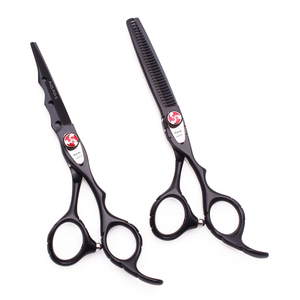
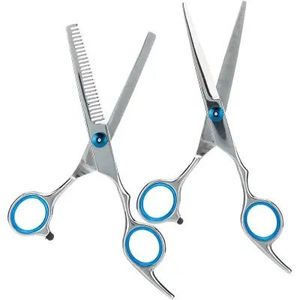
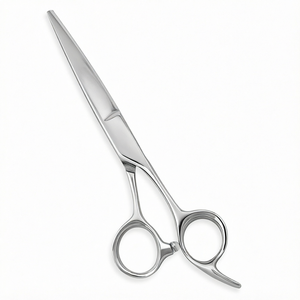
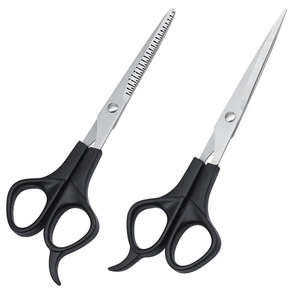
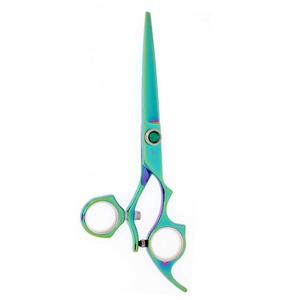
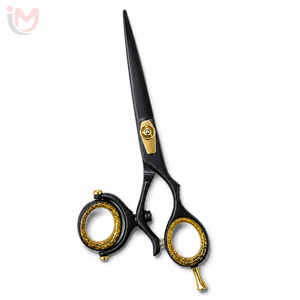
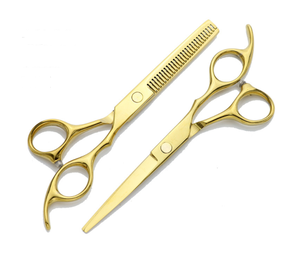
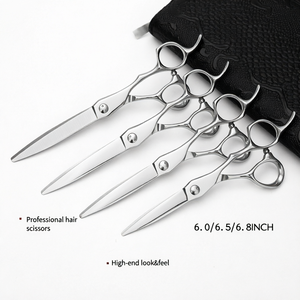
Direct Factory Inventory Showcase: High-grade stainless steel haircutting, thinning, and styling shears engineered for wholesale distribution & OEM custom branding.
1. The Global Beauty Instrument Ecosystem & Sourcing Dynamics
The international professional beauty and grooming instrument industry is undergoing a structural evolution driven by demand for surgical-grade precision, ergonomic durability, and strict international regulatory compliance. As international importers, distributors, and salon supply brands navigate global procurement, identifying reliable manufacturing hubs in China remains the cornerstone of maintaining market competitiveness and healthy profit margins.
China's beauty instrument manufacturing clusters—particularly within advanced industrial zones—integrate high-capacity automated forging technology, CNC multi-axis grinding, and rigorous metallurgical refinement with centuries-old metalworking traditions. Historically, regions like Sialkot, Pakistan, established early dominance in manual surgical instrument forging. Modern Chinese manufacturing ecosystems have complemented these traditional techniques by scaling precision vacuum heat treatments, PVD titanium plating, and automated AQL (Acceptable Quality Limit) quality inspection framework systems.
Whether sourcing hair thinning shears, razor edge scissors, cuticle nippers, podiatry cutters, or precision eyebrow tweezers, global procurement teams must look beyond superficial pricing. Information gain in today's supply chain requires auditing factory-direct metallurgical integrity, Rockwell Hardness (HRC) consistency, hinge-screw tolerance, and labor audit practices.
Forged Metallurgical Purity
Utilizing high-carbon martensitic stainless steels (420J2, 440C, VG-10, SUS440C) subjected to vacuum cryogenic heat treatments to prevent edge degradation and micro-pitting.
Micron-Tolerance CNC Honing
Hollow-ground inner blades paired with hand-honed convex razor edges ensure snag-free, effortless hair pushing and silk-smooth tactile feedback for salon stylists.
Global Regulatory Compliance
Certified production environments operating under ISO 13485:2016 quality frameworks, holding CE mark validation, US FDA registrations, and EU MDR compliance.
2. Metallurgical Science: Steel Grades, Hardness, & Performance Metrics
The cutting performance, corrosion resistance, and sharpening longevity of beauty instruments are directly dictated by raw alloy chemistry and heat treatment execution. Importing low-grade commercial steel leads to rapid dulling, blade misalignments, and rust formation under salon chemical exposure (barber disinfectants, perm solutions, and moisture).
Leading Chinese exporters offer clear material tier options to match client market positioning. Below is a comparative technical specification analysis of primary alloys used across high-tier shear and manicure tool production:
| Steel Alloy Grade |
Carbon % |
Chromium % |
Rockwell Hardness (HRC) |
Key Performance Characteristics |
Recommended Target Product |
| 420J2 Stainless Steel |
0.15 - 0.36 |
12.0 - 14.0 |
52 - 54 HRC |
High rust resistance, easy to sharpen, budget cost tier. |
Student scissors, entry-tier cuticle tools. |
| 440C Martensitic Steel |
0.95 - 1.20 |
16.0 - 18.0 |
58 - 60 HRC |
Superior edge retention, high wear resistance, balanced toughness. |
Professional barber shears, high-end nippers. |
| Japanese SUS440C |
1.00 - 1.10 |
16.5 - 17.5 |
59 - 61 HRC |
Ultra-pure grain structure, zero micro-gaps, exceptional smoothness. |
Master stylist hair scissors, convex edge tools. |
| Cobalt Alloy / VG-10 |
0.95 - 1.05 |
14.5 - 15.5 |
61 - 63 HRC |
Premium toughness, extreme hardness retention, resists chemical degradation. |
Luxury ergonomics shears, specialized thinners. |
Cryogenic Heat Treatment Process
High-end manufacturers subject forged steel blanks to sub-zero cryogenic processing (-120°C to -196°C) following thermal quenching. This deep freezing converts residual soft austenite steel phases into ultra-hard martensite crystals, increasing blade edge lifespan by up to 300% compared to standard air-cooled steel.
3. Modern Manufacturing Architecture & Quality Assurance Protocols
To consistently supply global markets across North America, Europe, and Asia-Pacific, top-tier Chinese instrument exporters implement a 12-stage closed-loop production system. This methodology ensures every instrument leaving the facility adheres to strict dimensional tolerances.
- High-Pressure Drop Forging: Solid stainless steel rods are heated and forged into high-density instrument blanks, eliminating internal air pockets.
- Precision Annealing & Normalizing: Relieves internal molecular stress, preparing metal for computer-guided machining.
- Multi-Axis CNC Milling: Handles, screw holes, and pivot slots are cut with sub-micron precision to guarantee seamless pivot alignment.
- Vacuum Heat Treatment & Tempering: Computer-controlled thermal cycles establish exact HRC ratings without surface oxidation.
- Automated & Hand Surface Polishing: Successive abrasive stages achieve mirror-smooth, satin-matte, or bead-blasted anti-glare finishes.
- Hollow Grinding & Ride Line Carving: Creates the inner concave blade curvature essential for smooth shear tension and clean hair cutting.
- Convex Edge Honing by Master Artisans: Razor-edge beveling is hand-finished by craftspeople with over a decade of personal experience.
- PVD Titanium & Color Coating: Applied via physical vapor deposition for scratch-resistant gold, black, rainbow, or rose gold aesthetics.
- Precision Screw Tension Setting: Ball-bearing, micro-ratchet, or flat-head tension systems are calibrated for ideal resistance.
- Ultrasonic Cleaning & Degreasing: Removes all polishing compounds and microscopic metal dust prior to final inspection.
- 100% Wet Hair & Fabric Test: Every scissor is manually tested on synthetic fiber and hair strands to verify zero snagging along the full blade path.
- Sterile Packaging & AQL Final Audit: Packed under cleanroom standards in custom blister cards, leather pouches, or presentation display boxes.
4. Enterprise Competitive Advantages & OEM/Private-Label Solutions
For international buyers looking to launch or scale a personal care brand, factory-direct OEM/ODM partnership unlocks unmatched flexibility and technical scalability. Leading exporters operate as full-service contract manufacturers, supporting custom brand development from technical CAD drafting to shelf-ready retail packaging.
Key Private-Label Customization Services
- Custom Branding & Logo Marking: Fiber laser engraving, chemical etching, or stamped logo placement on blades, handles, and tension screws.
- Ergonomic Tailoring: Off-set handles, crane handles, straight handles, swivel thumb rings, and removable finger rests tailored to ergonomic preferences.
- Specialized Surface Coatings: Mirror polish, satin polish, matte black electro-deposition, gold PVD coating, titanium multi-color plating, and rubberized anti-slip coatings.
- Bespoke Packaging Development: Custom blister packaging, magnetic hard boxes, eco-friendly paper boxes, molded EVA cases, and stitched genuine leather pouches.
- Low MOQ Flexibility: Low minimum order quantities per SKU allow importers to test niche market trends without excessive inventory carrying risk.
Contact Us for OEM Catalog
5. Regulatory Compliance & Quality Accreditation Manual
Navigating international customs standards requires sourcing from factories with fully documented quality systems. Reputable Chinese exporters provide complete audit trail packages for import clearance in regulated markets:
ISO 13485:2016 Certified
Validates that factory quality management systems comply with stringent global standards for medical devices and surgical-grade personal care instruments.
CE Mark & EU MDR Compliance
Ensures products meet European Union safety, health, and environmental protection requirements, compliant with Medical Device Regulation protocols.
US FDA Registration
Factory registration and product listings filed with the US Food and Drug Administration to facilitate seamless customs entry into North American ports.
6. Global Market Outlook: Procurement Trends (2026–2030)
As the professional grooming market expands globally, procurement managers must adapt to key technology and consumer trends reshaping instrument manufacturing:
- Lightweight Hybrid Alloys: Integration of titanium handles with high-hardness stainless blades to reduce hand fatigue for salon professionals working long hours.
- DLC (Diamond-Like Carbon) Coatings: High-tech carbon coatings offering extreme surface hardness (up to 70 HRC equivalent) and self-lubricating properties for ultra-low friction cutting.
- Sustainable Supply Chains: Shift toward 100% recyclable metal packaging, zero-discharge wastewater polishing systems, and ethically audited labor standards.
- Digital Inventory Integration: Direct EDI order placement, transparent real-time production tracking, and automated re-order triggers for enterprise distributors.
7. Frequently Asked Questions (B2B Procurement FAQ)
Answers to critical questions international procurement managers ask during factory qualification and contract negotiation:
Are Chinese beauty instrument suppliers direct manufacturers or trading companies?
Top exporters operate as fully integrated direct manufacturers. Modern facilities handle forging, precision CNC milling, heat treatment, grinding, hand-polishing, inspection, and packaging in-house under one unified quality management system, providing transparent pricing and batch traceability.
What is the standard production lead time for OEM/ODM orders?
Sample development and custom laser-engraved prototypes typically take 7 to 10 working days. Full mass production lead time ranges from 25 to 35 days depending on batch volume, technical coatings (such as PVD titanium plating), and custom packaging requirements.
What Acceptable Quality Limit (AQL) standards are applied during QC audits?
Standard production undergoes continuous inline inspection. Final pre-shipment audits adhere to ISO 2859-1 / ANSI/ASQ Z1.4 standards using AQL Level II, setting critical defect thresholds at 0, major defects at 1.5, and minor defects at 4.0.
Can factories manufacture instruments according to custom technical CAD drawings or physical samples?
Yes. OEM/ODM engineering teams utilize 3D CAD modeling, reverse engineering, and custom forging mold creation to replicate or refine exact dimensions, handle ergonomics, blade curvatures, and weight specs supplied by the customer.
What custom packaging options are available for private label retail?
Options include custom-printed color blister packaging, sealed hanging cards, zippered leatherette cases, aluminum travel kits, magnetic hardcover gift boxes, and eco-friendly FSC-certified paper packaging with custom molded inner trays.
How do factories ensure long-term rust resistance and chemical durability?
Instruments are manufactured exclusively using certified martensitic stainless steel with optimized chromium content. Following hand-polishing, all tools undergo chemical passivation and ultrasonic oiling to protect against barbicide solutions and humidity.
What payment terms and shipping Incoterms are available for overseas importers?
Standard commercial terms include EXW, FOB (Ningbo/Shanghai/Shenzhen), CFR, CIF, and DDP. Flexible payment options include T/T wire transfer, Irrevocable L/C at sight, and trade assurance protection terms for qualified enterprise buyers.
How can I request physical sample evaluation kits for quality testing?
Sample evaluation kits containing cutting shears, thinning scissors, and precision grooming instruments can be dispatched within 48 hours via express air courier (DHL/FedEx/UPS). Click the "Contact Us" button below to submit your sample specifications directly to our engineering export team.
 Manufacturer