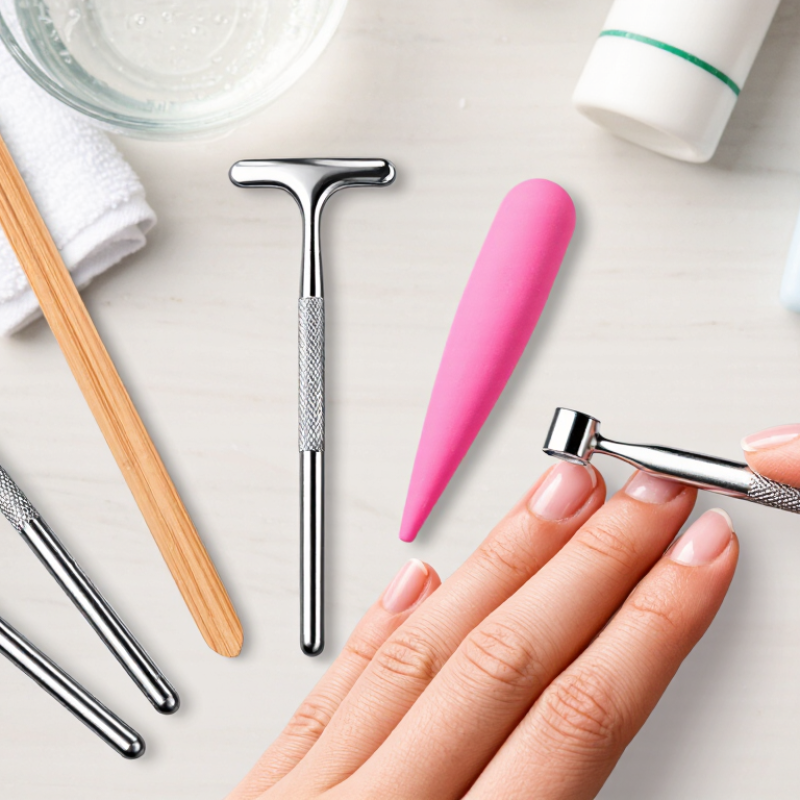
| Definition |
A cuticle pusher is a manicure tool used to gently move softened cuticle tissue away from the nail plate. |
Use light pressure and work slowly around the base and sides of the nail. |
Treating the tool as a scraping device or using force to remove attached tissue. |
| Typical Design |
Many pushers have a broad, slightly curved end for pushing and a pointed or narrow end for cleaning beneath the free edge. |
Choose a shape and size that fit the nail without pressing into the surrounding skin. |
Using the pointed end to cut, pierce, or dig into the skin. |
| Main Purpose |
It helps prepare the nail surface for polish or other nail services and can improve the neat appearance of the nail area. |
Focus on gently repositioning loose, softened tissue rather than removing living skin. |
Pushing back the cuticle aggressively in an attempt to make the nail bed look longer. |
| Preparation |
Hands and tools should be clean before the procedure. Cuticle tissue is easier to move after it has been softened. |
Wash hands, clean under the nails, and soak or soften the area according to the product instructions. |
Working on dry, hard tissue with excessive pressure. |
| Basic Technique |
The broad end is placed near the cuticle line and moved gently in short strokes toward the base of the nail. |
Keep the tool nearly parallel to the nail plate and stop when resistance or discomfort occurs. |
Holding the tool at a steep angle, which can scratch the nail plate or injure the skin. |
| Cuticle vs. Eponychium |
The cuticle is dead tissue attached to the nail plate; the eponychium is living skin at the nail base. |
Push only loose tissue from the nail plate and leave living skin intact. |
Cutting or forcibly pushing the living skin fold, which may cause irritation or infection. |
| Cleaning the Tool |
A reusable tool can transfer microorganisms if it is not cleaned and disinfected properly. |
Clean visible residue first, then disinfect the tool using a method suitable for its material and follow the disinfectant label. |
Relying on a quick rinse with water or sharing an unclean tool. |
| Personal Use |
A personal pusher should be used only by the owner unless it has been properly cleaned and disinfected. |
Store the dry tool in a clean, covered location after disinfection. |
Leaving the tool wet, exposed, or in contact with dirty surfaces. |
| When to Stop |
Pain, bleeding, swelling, redness, or burning indicates that the procedure should stop. |
Clean minor damage gently and allow the area to recover before further manicure work. |
Continuing to push through pain or trying to remove damaged tissue. |
| Conditions Requiring Caution |
Inflamed, infected, cracked, or injured skin should not be manipulated. |
Postpone the manicure and seek medical advice if symptoms are persistent or worsening. |
Covering irritation with polish or using the tool on an open wound. |
| Frequency |
Cuticle care does not need to be performed aggressively or daily; excessive manipulation can irritate the area. |
Use gentle maintenance only when needed and moisturize the surrounding skin regularly. |
Repeated pushing or scraping that leaves the skin tender or dry. |
| Aftercare |
Moisturizing helps reduce dryness around the nails after cleaning and grooming. |
Apply cuticle oil or hand moisturizer to the nail folds and surrounding skin. |
Using harsh products immediately after causing irritation or a small abrasion. |