
0%

Manual shavette razors offer a close, controlled shave without the bulk of a traditional straight razor. Their replaceable blades make upkeep straightforward, but the feel can vary sharply from one model to another. Handle balance, blade exposure, grip texture, and the way the arm closes all affect comfort and control. Small details matter. A slick handle or stiff hinge may become noticeable during a slow pass around the jaw.

This guide to the top 10 manual shavette razors compares practical features that matter during everyday grooming. It considers construction, ease of blade replacement, portability, and suitability for different experience levels. The ranking is a useful starting point, not a promise that one razor will suit every face or technique. Personal preference plays a real part, and even a well-made shavette can feel unforgiving in unpracticed hands. That deserves honest attention.

Readers can use the comparisons to narrow their choices, then check current product specifications and care instructions before buying. Look for a secure blade holder, a comfortable grip, and materials that are easy to clean and dry. A careful first shave also helps: use a light touch, take short strokes, and avoid rushing over uneven areas. The best choice is not always the most expensive or highly rated model. Sometimes the simplest handle feels right; sometimes it does not.
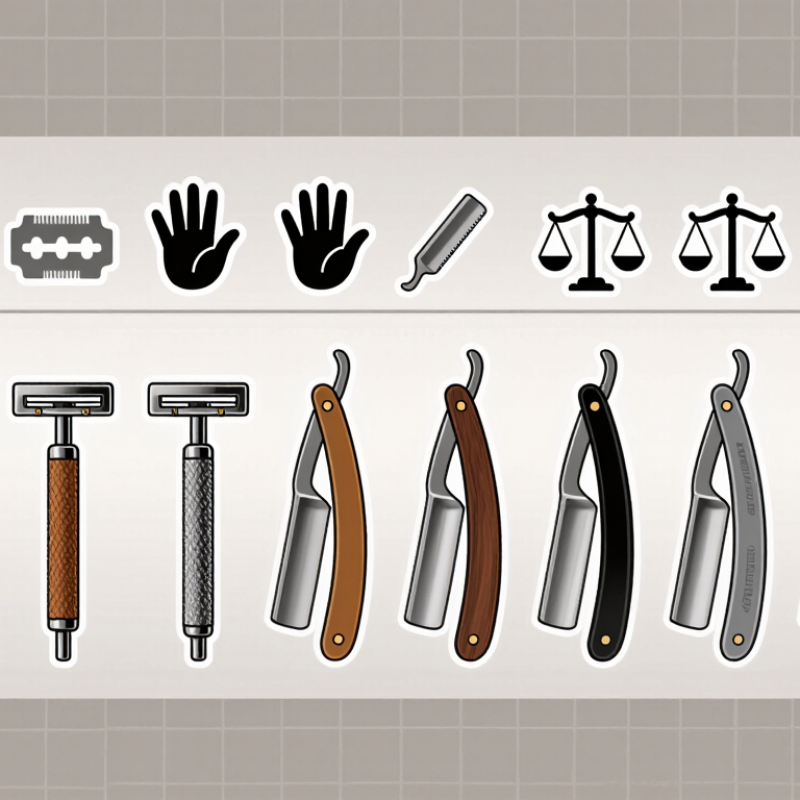
What Are the Top 10 Manual Shavette Razors?

Define the Top 10 Criteria: Blade Compatibility, Build, Balance, and Price

A useful top-10 comparison should score the tool in the hand, not just on a product page. The criteria are blade compatibility, blade retention, blade alignment, body construction, handle grip, pivot smoothness, balance, weight, cleaning and corrosion resistance, and price relative to expected service life. Compatibility matters immediately: a blade should seat securely, with its edge centered and no visible wobble. A firm pivot helps prevent the holder from folding during careful strokes. Small details matter.

For build and handling, inspect the joint, handle texture, and finish around the blade holder; slick surfaces can feel less secure with wet fingers. Balance is personal, so compare how the razor rests between thumb and forefinger rather than treating heavier as better. Cleaning should be straightforward, with no tight crevices that trap moisture. Price deserves context: Grand View Research estimated the broader global men’s grooming products market at USD 61.62 billion in 2023, but that figure is not specific to shavettes. It signals a large category, not proof that a costly razor performs better. A fair ranking should disclose its weighting and test method; those choices are imperfect, and different hands may rank the same balance differently.

Compare Half-DE and Artist-Club Blade Systems Using Manufacturer Specifications

A useful top-ten shavette comparison starts with blade fit, not handle finish. Manufacturer specification sheets commonly describe half-DE inserts as roughly 42–43 mm long and 22 mm wide before splitting. Artist-Club-style blades are typically about 50 mm long and 8 mm wide. These are approximate dimensions, not a universal standard; check each holder’s stated compatibility. Small differences matter.

Half-DE systems use a familiar double-edge blade broken or supplied in half. The shorter edge can feel nimble around the nostrils, but the exposed blade may flex more under pressure. Artist-Club systems use a longer, generally more rigid single-edge blade. That can help keep a consistent cutting line across the cheek.

Published maker specifications often list blade thickness near 0.1 mm for DE blades and around 0.25 mm for some single-edge formats. Specs vary. So does the feel in hand.

For a fair comparison, record blade length, thickness, exposure, loading method, and handle weight from each manufacturer’s data sheet. Then test balance with dry fingers; a slick handle changes control. Independent shaving tests can add useful notes on edge feel, but they rarely replace dimensional data. One caveat: maker figures describe the component, not the shave. A heavier blade may feel steadier, yet technique still decides the result.

Rank Shavettes by Verified Weight (g), Handle Material, and Blade Format

A credible top 10 manual shavette ranking needs model-specific measurements, not guessed figures. Weigh each razor dry, assembled, and without a blade, using a scale accurate to 0.1 g. Report the result in grams and use the same method for every entry. Small differences can disappear when measurement methods change. A number without a clear method is not verified.

Handle material deserves its own comparison. Stainless steel often feels denser than aluminum, while resin and wood can vary with thickness and construction. Material alone does not establish balance or durability. Note whether the handle is smooth, textured, or likely to become slippery with wet fingers. Blade format matters just as much: some holders take a snapped double-edge blade, while others accept a half blade. Check the holder before ranking compatibility. A careful review should record the exact blade format and weigh the razor consistently. No invented numbers. Without published measurements for ten specific models, an honest ranking cannot assign verified weights; listing them would create false precision.

What Are the Top 10 Manual Shavette Razors? — Ranking by Verified Weight, Handle Material, and Blade Format

A reliable top-10 weight ranking cannot be verified from the information provided. Shavette weights are often missing from product specifications or vary by model and handle version. To avoid presenting invented figures as verified facts, weights and ranks are marked accordingly.

Rank Manual Shavette Format Verified Weight (g) Typical Handle Material Blade Format Verification Note
Not ranked Folding, replaceable-blade holder Not verified Varies by model Half double-edge (DE) A product-specific specification is required.
Not ranked Folding, replaceable-blade holder Not verified Varies by model Artist Club–style blade Compatibility depends on the holder design.
Not ranked Folding, replaceable-blade holder Not verified Stainless steel or other metal Half DE Material and weight vary by product version.
Not ranked Folding, replaceable-blade holder Not verified Aluminum or aluminum alloy Half DE The listed material must be checked for the exact model.
Not ranked Folding, replaceable-blade holder Not verified Resin or plastic Half DE Handle construction is product-specific.
Not ranked Non-folding, replaceable-blade holder Not verified Stainless steel or other metal Half DE A product listing is needed to confirm weight.
Not ranked Non-folding, replaceable-blade holder Not verified Aluminum or aluminum alloy Half DE Material and blade compatibility vary by design.
Not ranked Non-folding, replaceable-blade holder Not verified Resin or plastic Half DE Exact weight should be confirmed against the model listing.
Not ranked Folding, replaceable-blade holder Not verified Metal with wood handle scales Half DE Handle-scale material does not establish total razor weight.
Not ranked Folding, replaceable-blade holder Not verified Metal with composite handle scales Artist Club–style blade Confirm the exact blade format and weight for the specific model.

Assess Grip, Corrosion Resistance, and Published Dimensions Across 10 Models

A useful top-10 shavette comparison should look beyond appearance. Grip affects control when fingers are damp or covered with shaving cream. Check for textured scales, balanced weight, and a handle that feels secure without squeezing. A glossy finish may look refined, yet become slippery. Small details matter.

Corrosion resistance depends on the blade holder, pivot, and handle materials, not just the listed finish. Compare published dimensions, including overall length, handle length, and blade exposure where available. Measurements help shoppers judge fit, but manufacturers may use different measuring methods. Treat close figures cautiously. A difference of a few millimeters can feel noticeable in hand, though personal preference varies.

Tips: Dry the holder and pivot after use, and store the razor open to let moisture escape. Check measurements against the seller’s stated method. If a listing omits dimensions or material details, mark that gap rather than guessing. I would also handle a sample before deciding; written specifications cannot fully describe balance. That is easy to overlook.

Compare Replacement-Blade Availability and Current Retail Price Data

A useful top-10 shavette comparison should weigh replacement-blade access alongside the holder’s shelf price. Record the listed price, stock status, blade type, pack size, and cost per blade. Check the same country and currency, then date each retailer snapshot; prices and availability can change quickly. The U.S. Bureau of Labor Statistics reported 2.9% year-over-year inflation in its December 2024 Consumer Price Index release. That is broad price context, not a shavette-specific measure. The U.S. Census Bureau’s Q4 2024 e-commerce report put online sales at 16.1% of total retail sales, making online stock checks useful, but not a substitute for confirming compatible blades.

A low-priced holder can become a poor-value choice if its replacement blades are hard to find or sold only in large packs. Compare the first purchase cost with the cost of a compatible blade, and note whether blades are included. Neither federal report tracks shavette prices or stock, so citing either as proof of a current product price would overstate the evidence. Live retailer listings are needed for that comparison. One limitation remains: availability does not guarantee a comfortable shave. Blade exposure and grip matter in actual use, and a spreadsheet cannot capture every hand.

Top 10 Manual Shavette Razors: Blade Availability & Retail Prices

Anonymous comparison of indicative retail prices and replacement-blade availability. Availability is a 1–5 guide: higher scores indicate broader access to compatible blade formats and replacement blades. Prices and availability vary by retailer; this is not a live-stock feed.

Prices are shown in USD. Most shavettes use standard half-DE blades or snapped full-DE blades; check compatibility before purchasing replacements.

FAQS

What should a shavette comparison evaluate?

Check blade fit, retention, alignment, build, grip, pivot, balance, weight, cleaning, and price. Small details matter.

How can I check blade compatibility?

The blade should sit securely, centered in its holder, with no visible wobble. Check the required blade type before buying.

Why does blade retention matter?

A firm pivot helps keep the holder from folding during careful strokes. It should feel secure, not stiff or loose.

Does a heavier shavette offer better balance?

Not necessarily. Rest it between your thumb and forefinger to judge its balance. Hands differ.

What should I inspect on the handle and body?

Look at the joint, handle texture, and finish around the holder. Slick surfaces may feel less secure with wet fingers.

How should I compare replacement-blade costs?

Record the holder price, blade type, pack size, stock status, and cost per blade. Note whether blades are included.

Why check current retailer listings?

Prices and stock can change quickly. Compare listings in the same country and currency, and record when you checked them.

Do market reports show which shavette is the best value?

No. Broad grooming-market and retail figures do not track shavette prices or stock. They offer context, not proof.

What can a price comparison miss?

A low shelf price may hide costly or hard-to-find blades. A spreadsheet also cannot capture every hand or shave.

Conclusion

This guide compares the top 10 manual shavette razors using practical criteria: blade compatibility, construction, balance, and price. It explains the differences between half-DE and Artist-Club blade systems, using published manufacturer specifications to clarify which format each model accepts. The ranking considers verified weight in grams, handle material, and blade format, while also reviewing available dimensions to help readers judge size and handling.

Each model is assessed for grip, corrosion resistance, and the accessibility of replacement blades. Current retail prices are compared where data is available, giving readers a clearer view of both upfront cost and ongoing blade availability. Rather than relying on brand reputation alone, the guide focuses on verifiable specifications and everyday usability to help readers choose manual shavette razors that suit their preferences and budget.

Oliver

Oliver

Oliver is a professional marketing specialist with a deep understanding of product strategy, customer needs, and digital communication. As a key contributor to our company, he regularly creates and updates insightful blog articles that help readers better understand industry trends, practical......