
ManufacturerChoosing among the top 10 callus removers is not just a matter of picking the strongest-looking tool. Global buyers need to compare how each product works, what materials touch the skin, and how easy it is to clean. A rough pumice surface, a replaceable file head, and a powered roller offer different levels of control. Fit matters. So does grip, especially when hands are wet.
Podiatrist Dr. Miguel Cunha has explained that calluses develop in response to repeated pressure and friction. That principle is useful when assessing removers: a tool can smooth thickened skin, but it cannot address the source of pressure by itself. Buyers should look for clear instructions, practical safety features, and claims that do not promise instant results. A gentle approach matters. This guide compares callus removers by design, usability, maintenance, and value, while noting where product details may leave questions unanswered. Those gaps deserve attention; a polished product page is not the same as independent evidence. Individual needs also vary, so readers with pain, diabetes, reduced sensation, or persistent skin problems should seek advice from a qualified healthcare professional before using a remover.
Callus removers are tools or topical products designed to reduce localized thickened skin. A callus forms when repeated pressure or friction builds up the outer skin layer, often beneath the forefoot or heel. The CDC’s 2024 National Diabetes Statistics Report estimates that 38.4 million people in the United States had diabetes. This is not a callus-prevalence figure, but it underscores why foot-care products should include clear safety guidance.
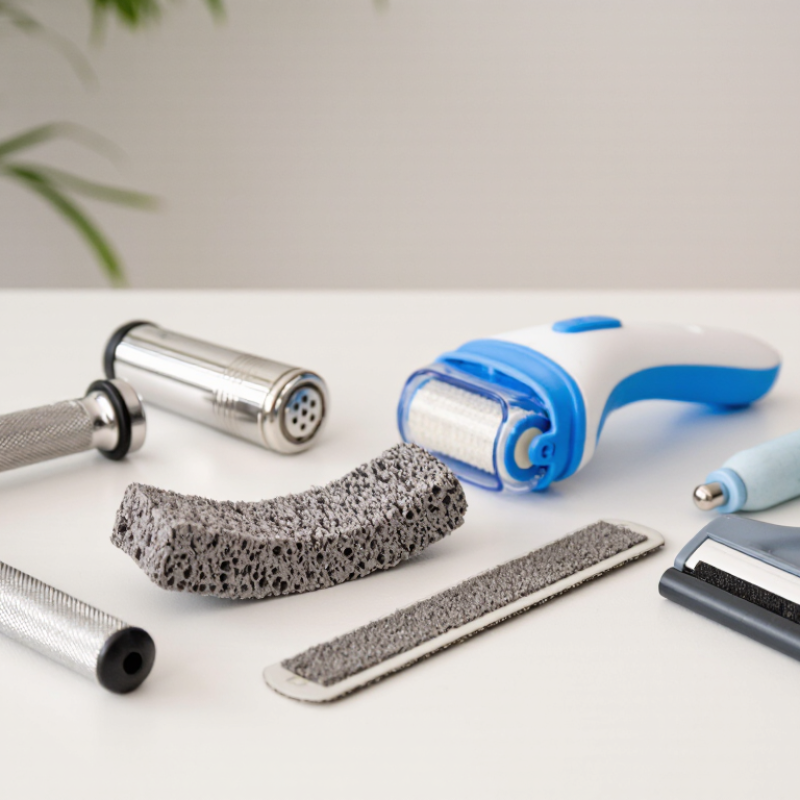
The ten main types include six mechanical options: pumice stones, manual foot files, metal rasps, callus shavers, electric roller files, and electric sanding-disc files. Topical options include urea or lactic-acid exfoliating gels, salicylic-acid pads or liquids, and exfoliating foot-peel masks. Clinical rotary instruments make up the tenth type. The boundaries are not always neat; some electric tools use interchangeable abrasive heads.
For global sourcing, compare abrasive grade, handle grip, motor speed settings, replacement-head availability, and ingredient disclosure. Ask suppliers for material specifications and test documentation, not just product photographs. Instructions should explain gentle use and warn against use on irritated or broken skin. People with diabetes or reduced foot sensation should seek professional advice before removing calluses themselves. A polished package does not prove safe performance.
Manual callus files and pumice stones give users direct control over pressure and treated area. They are inexpensive, portable, and easy to inspect between uses. The drawback is user technique: repeated scraping can irritate nearby skin. Control matters. Electric rollers remove rough surface gradually, but speed, abrasive-head texture, and cleaning access deserve close inspection. A powerful motor is not automatically a better choice. The American Podiatric Medical Association’s 2014 Public Opinion Research on Foot Health and Care reported that 77% of Americans had experienced foot problems. That figure is not specific to calluses, but it underlines why comfort and safe handling matter.
Chemical removers use keratolytic ingredients, such as salicylic acid, to soften thickened skin. Buyers should check concentration, contact time, packaging clarity, and warnings for sensitive skin. They are not a fit for everyone, especially people with reduced foot sensation or circulation concerns; professional advice is prudent. Professional-use designs may offer replaceable heads, durable handles, or surfaces suited to validated cleaning procedures. Ask suppliers for material specifications and cleaning instructions, not just product photos. Small details matter. A rough edge or unclear instruction can undermine an otherwise useful design. None of these formats suits every foot, and product comparisons should state that plainly.
| No. | Design / Product Type | How It Works | Power or Consumable | Best Suited For | Key Advantages | Important Considerations |
|---|---|---|---|---|---|---|
| 1 | Pumice Stone | A porous abrasive stone gradually buffs softened, thickened skin. | Manual; no replacement power source | Light routine smoothing after bathing or soaking | Simple, portable, and easy to use without batteries or charging. | Use gentle pressure and rinse after use. Avoid sharing personal foot-care tools. |
| 2 | Foot File with Replaceable Abrasive Surface | An abrasive sheet or surface files rough skin through repeated strokes. | Manual; replaceable file or pad on some designs | Home foot care and travel | Offers direct control over the area being treated and is available in compact formats. | Use on dry or softened skin according to the product instructions; do not file healthy skin aggressively. |
| 3 | Metal Foot Rasp | A textured metal surface abrades thickened skin during manual filing. | Manual; reusable tool | Users who prefer a durable, non-powered file | Does not require batteries or abrasive replacement sheets. | Can remove too much skin if pressed hard. Clean and dry thoroughly after use. |
| 4 | Callus Shaver with Guard | A guarded blade trims thin layers of hardened skin. | Manual; replaceable blade on many models | Careful users familiar with blade-based tools | Can address localized thickening with controlled, shallow strokes. | Requires particular care to avoid cuts. Not suitable for use on broken or irritated skin. |
| 5 | Battery-Powered Roller File | A rotating abrasive roller buffs thickened skin as it moves across the foot. | Battery-powered; roller heads may be replaceable | Convenient at-home maintenance | Powered abrasion reduces repetitive manual filing effort. | Follow the device instructions and avoid prolonged use in one spot. Check whether batteries and replacement rollers are locally available. |
| 6 | Rechargeable Electric Foot File | A motor turns an abrasive head to smooth rough areas. | Rechargeable battery; charging method varies by model | Regular home use and buyers seeking cordless operation | Reusable, cordless designs can be convenient for routine care. | Check charging compatibility, replacement-head availability, and the manufacturer’s cleaning instructions. |
| 7 | Water-Resistant Electric Roller File | A motorized abrasive roller is designed for use in specified damp conditions. | Battery or rechargeable power; design varies | Users who prefer using a foot-care device near a sink or in a damp setting | Some models allow easier rinsing of the roller or device exterior. | Water resistance is model-specific and does not necessarily mean the device is safe to submerge. Follow its stated care instructions. |
| 8 | Urea-Based Callus Softening Cream | A topical formula containing urea helps soften dry, thickened skin; concentration varies by product. | Topical cream; replenishable consumable | Gradual softening as part of a foot-care routine | Does not require scraping or an electric device and can be applied to targeted areas. | Use as directed and avoid broken or irritated skin. Higher-strength products may require additional care; check the label and local regulations. |
| 9 | Salicylic-Acid Callus Treatment | A topical keratolytic ingredient helps loosen thickened skin; products may be sold as liquids, gels, pads, or plasters. | Topical treatment; single-use or multi-use packaging | Small, localized areas when the label indicates suitability | Available in targeted application formats without a powered tool. | Follow the label precisely and protect surrounding skin as instructed. People with diabetes, poor circulation, or reduced foot sensation should seek professional advice before use. |
| 10 | Professional Podiatry Instrument | A trained practitioner may use specialized instruments to reduce excess hardened skin during clinical foot care. | Professional-use instrument; cleaning and sterilization requirements apply | Clinical care or situations requiring assessment by a foot-care professional | Allows treatment to be selected and performed by a qualified practitioner. | Not intended for unsupervised home use. Instrument handling, hygiene, and sterilization must meet applicable professional standards. |
A callus remover’s abrasive grit affects how quickly it smooths thick, dry skin. Coarse rollers may remove material faster, but they can feel harsh on sensitive areas. Fine grit offers more control, though it may take longer. Numbers can mislead. Compare grit descriptions carefully, since grading systems are not always consistent across suppliers.
Motor speed matters, but advertised RPM tells only part of the story. Check whether the roller keeps turning under gentle pressure; a drop in speed can make removal uneven. In a product evaluation, use similar pressure and timing across devices, then inspect the skin for smoothness and irritation. Test gently. Stop if the skin feels sore, and follow the device instructions.
Battery life should reflect real use, not just a best-case figure. Ask how many sessions a full charge supports, how long charging takes, and whether power fades as the battery runs low. A clear performance test should note skin condition, session length, and roller wear. Results vary, and one test cannot represent every user. That limitation is easy to overlook, especially when a device feels powerful during a short trial.
For global buyers comparing the Top 10 callus removers, electrical safety deserves more attention than motor speed alone. IEC 60335-2-23 covers household and similar appliances for skin or hair care, including relevant safety requirements. Its scope, read alongside IEC 60335-1, includes appliances rated up to 250 volts for single-phase use. Check the exact standard edition and product classification with a qualified testing laboratory; a foot-care device’s design can affect which tests apply.
Ask suppliers for test reports tied to the exact model, not a similar-looking unit. Reports should identify the tested sample, applied standard editions, operating conditions, and results for hazards such as electric shock, abnormal operation, and temperature rise. A warm handle after repeated use is not proof of danger, but unexplained heat, damaged insulation, or a loose charging port deserves investigation. Small details matter.
IEC requirements provide a technical baseline, not automatic approval in every destination market. Confirm that the report matches the shipped voltage, plug, charger, and battery configuration. If a report lists only “IEC tested,” request the clause-level results and laboratory details. That takes extra time. It may still miss a supplier change made after testing, so request change-control records and inspect production samples. A certificate is useful, but it is not the whole story.
A useful top ten should cover different needs, not just stronger abrasion. For light, dry calluses, include pumice stones, fine-grit foot files, and moisturizing creams. For thicker patches, consider dual-grit files, ceramic buffers, and manual rasps, with clear pressure-control instructions. Electric rollers and replaceable-head devices suit buyers seeking repeatable home use. Keep a clinician-directed option for high-risk users. Less is safer.
Match each tool to skin sensitivity and severity. Fine surfaces and short sessions suit delicate skin; coarse rasps can remove too much if pressed hard. The American Podiatric Medical Association’s 2014 Public Opinion Research on Foot Health found that 77% of surveyed U.S. adults had experienced foot problems. That survey is neither global nor callus-specific, so it signals interest, not market size. WHO estimated 830 million people were living with diabetes in 2022; buyers should favor prominent warnings and advise people with diabetes or reduced sensation to seek professional guidance before treating calluses.
For global purchasing, check practical details: wet-use suitability, replacement-head availability, voltage compatibility, and instructions that translate clearly. Hot, humid markets may value washable, quick-drying tools; colder regions may prefer gentle files paired with emollient creams. These are sourcing considerations, not universal preferences. A neat ranking can still miss local habits.
Coarse rollers may smooth thick, dry patches faster, but can feel harsh on sensitive skin. Fine grit offers more control. Numbers can mislead, since suppliers may use different grading systems.
No. Check whether the roller keeps turning under gentle pressure. If it slows, removal may become uneven. Test gently.
Use similar pressure and session lengths with each tool. Then check for smoothness and irritation. Stop if skin feels sore, and follow the device instructions.
Record sessions per charge, charging time, and whether power fades near empty. Note session length and roller wear, too. A short trial may hide weak performance.
Pumice stones, fine-grit files, and moisturizing creams may suit mild roughness. Short sessions can help limit irritation. Results still vary.
Dual-grit files, ceramic buffers, and manual rasps are options. Use controlled pressure; pressing hard can remove too much. Less is safer.
People with diabetes or reduced sensation should seek professional guidance before treating calluses. Choose tools with clear warnings, and avoid relying on feel alone.
Check wet-use suitability, replacement-head access, voltage compatibility, and clear instructions. Washable, quick-drying tools may suit humid settings, but local habits differ.
No. Results depend on skin condition, session length, and tool wear. One trial cannot represent every user. A tidy ranking can still miss real routines.
This guide explores the top 10 callus removers by first explaining what they are and how they differ, from manual files and electric rollers to chemical treatments and professional-use tools. It compares each design’s strengths and limitations, helping readers understand which options may suit home routines, frequent use, or more intensive foot-care needs. Key performance factors include abrasive grit, motor speed, battery life, comfort, and how efficiently a device addresses different levels of rough skin.
The guide also considers skin sensitivity and practical safety when choosing a product. Electric models are assessed against relevant IEC 60335-2-23 safety considerations, while selection advice connects removal performance with user needs and buyer markets. By weighing severity of calluses, preferred operation, maintenance, and expected use, readers can identify suitable product types and make a more informed comparison across the ten categories.