
ManufacturerChina has become a major sourcing center for professional cutting tools, including razor edge shears. Yet supplier quality varies widely. This guide examines ten Chinese manufacturers and exporters serving salons, barbers, stylists, and private-label brands.
Each supplier is considered through practical purchasing criteria. These include steel grade, edge finishing, blade alignment, tension systems, handle comfort, inspection procedures, customization, and after-sales support. Sample testing matters. A polished catalog cannot reveal vibration, hand fatigue, or uneven closing pressure.
Industry educator Ivan Zoot has described a quality shear as “an extension of the hand.” That idea remains useful when comparing razor edge shears. The best pair should close smoothly, move quietly, and preserve control during detailed cutting. Small details matter, such as a clean pivot screw, a balanced grip, and an edge that does not snag fine hair.
This ranking is not absolute. Supplier capabilities can change with materials, production teams, and order volumes. Some factories may excel at OEM projects but offer limited stock designs. Others may provide attractive pricing while needing stronger quality documentation. That is worth questioning.
Buyers should request current samples, steel specifications, inspection records, packaging details, and production lead times. They should also clarify sharpening support and replacement-part availability. The final choice should reflect actual use, not only online claims. Reliable sourcing requires patience, comparison, and a little skepticism. Mistakes remain possible, even after careful review.
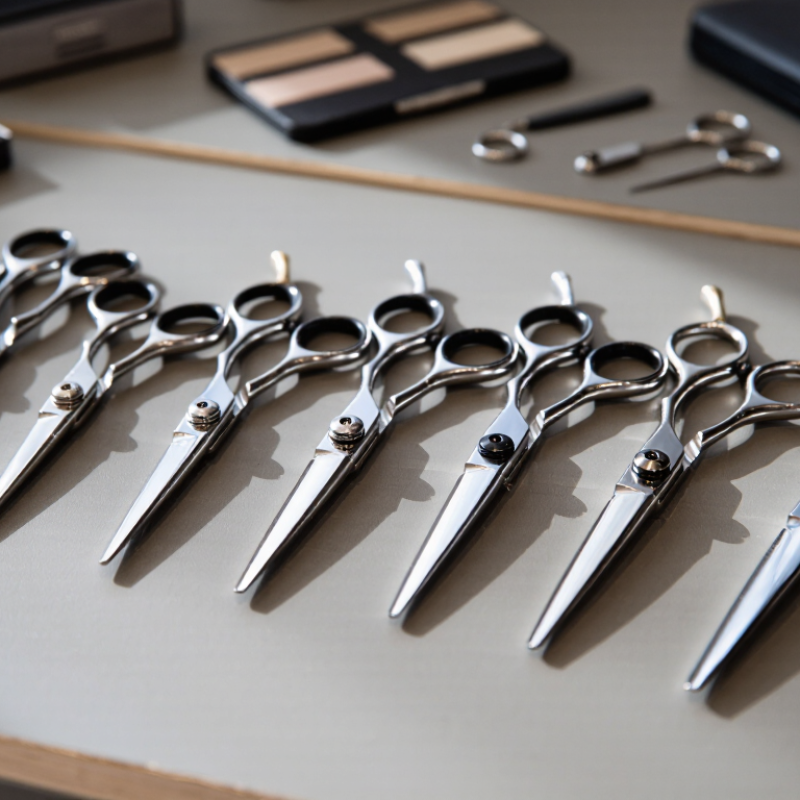
A high-quality razor edge shears supplier in China should prove performance, not merely display polished tools. Experienced buyers should examine cutting samples, factory records, and inspection methods. The shears should close smoothly without a gritty stop. Their blades should create a clean, controlled cut from heel to tip. Consistency matters most. A reliable supplier uses suitable stainless steel, stable heat treatment, and precise hollow grinding. These details affect sharpness, comfort, and service life.
Professional suppliers explain their manufacturing process clearly. They can identify the steel grade, hardness range, edge angle, and tension settings. They should also provide inspection reports for blade alignment, screw movement, surface finish, and packaging strength. A practical test uses real hair, repeated cuts, and several opening angles. One showroom sample proves very little. Batch testing gives stronger evidence. Clear sample approval records reduce misunderstandings later.
Reliability appears in communication and traceability. Each production batch should have identifiable inspection data and trained quality personnel. The supplier should answer technical questions with measurements, not vague promises. Export experience also matters, especially when packaging, documentation, and delivery schedules require coordination. No supplier gets every batch perfect. A responsible manufacturer admits occasional variation and explains how it will be corrected. Buyers should still challenge unclear claims. Sometimes the cheapest sample feels impressive, but its edge weakens after repeated use. That possibility deserves careful testing before a long-term partnership.
This benchmark model shows the relative importance of common professional procurement criteria. Consistent edge geometry, material traceability, and quality control generally have the greatest influence on cutting performance, durability, and batch-to-batch consistency.
Evaluating China’s top razor edge shears suppliers requires more than comparing prices. Begin with cutting performance. Test samples on cotton, silk, synthetic fabric, and layered materials. Record blade smoothness, hand pressure, edge alignment, and thread-pulling after repeated cuts. A polished catalogue can still hide uneven tension.
Quality systems matter, but certificates need careful reading.
The ISO Survey 2022 recorded 1,265,216 ISO 9001 certificates worldwide. Ask whether a supplier’s certificate covers manufacturing, inspection, and the relevant facility. Check material traceability, hardness records, blade-grinding controls, and final inspection reports. Use ISO 2859-1 sampling methods for batch inspection, rather than trusting one attractive sample. The World Bank’s Logistics Performance Index 2023 placed China 19th globally. That supports strong shipping capability, but delivery performance does not prove cutting quality. No scorecard is perfect. I would still repeat testing after production changes.
Tips:
Request three samples from different batches. Measure closing force with the same gauge. Inspect the pivot screw, finger rings, burrs, and corrosion marks under bright light. Require photographs of production stages, not only finished products. Confirm packaging protects the tips from impact. A supplier that explains failed tests honestly may be more reliable than one promising zero defects. Mistakes happen, and evaluation should reveal how quickly they are corrected.
China Top 10 Razor Edge Shears Suppliers
These profiles examine ten leading supplier types in China’s razor edge shears market. One specializes in precision salon shears, using CNC grinding and hand finishing. Another focuses on lightweight models for barbers who work long shifts. A third supplies ergonomic shears with offset handles and adjustable tension screws. The remaining suppliers cover pet grooming, textile cutting, medical-grade processing, private-label production, and small-batch orders. Several factories combine forging, heat treatment, polishing, assembly, and inspection under one roof. This can shorten delivery times and improve production control.
From practical sourcing experience, edge consistency matters more than mirror polishing. A reliable supplier should explain its steel grade, hardness range, sharpening method, and inspection process. Ask for close-up edge photographs and test samples. Check whether the blades close smoothly without catching fabric or hair. Export experience also matters, especially when documents, packaging, and product tolerances must remain consistent. Some suppliers present impressive samples but provide weaker follow-up quality. That gap deserves attention.
Tips: Request three samples from different production batches. Measure blade alignment, handle comfort, screw stability, and cutting performance. Confirm sampling fees, replacement terms, lead times, and inspection records in writing. Independent testing can reveal problems that photographs hide. I would also avoid choosing only by price. A cheaper shear may require earlier sharpening, creating hidden operating costs. Even experienced buyers can overlook packaging damage during transit. That mistake is worth reviewing before placing a large order.
| Rank | Supplier Profile | Manufacturing Region | Primary Product Focus | Common Steel Options | Razor-Edge Features | Typical Finishing | Common Quality Documentation | Typical MOQ | Typical Lead Time |
|---|---|---|---|---|---|---|---|---|---|
| 1 | Supplier Profile 01 | Jiangsu | Professional hairdressing shears and texturizing shears | 9Cr18MoV, 440C, VG-10 by specification | Convex hollow-ground edge; adjustable tension system | Mirror polish, satin polish, titanium-color coating | Material certificate and inspection report available by order | 100–300 pcs | 25–45 days |
| 2 | Supplier Profile 02 | Zhejiang | Barber shears, salon shears, and private-label cutting tools | 9Cr18MoV, 420J2, 440A | Convex cutting edge; hand-finished blade alignment | Polished, bead-blasted, black PVD-style finish | Incoming material inspection and final sampling records | 200–500 pcs | 30–50 days |
| 3 | Supplier Profile 03 | Guangdong | High-volume salon scissors and professional grooming sets | 440C, 9Cr18MoV, AUS-8 equivalent grades | Convex edge with low-friction blade movement | Satin, mirror, electroplated decorative finishes | Dimensional inspection, hardness testing, packing inspection | 300–1,000 pcs | 30–55 days |
| 4 | Supplier Profile 04 | Shanghai | Premium hand-finished cutting shears for export programs | VG-10, 440C, powder metallurgy steel on request | Fine convex edge; precision-set finger tension | Hand polish, satin polish, corrosion-resistant coating | Traceable batch records and hardness reports | 50–200 pcs | 35–60 days |
| 5 | Supplier Profile 05 | Henan | Stainless-steel shears for institutional and grooming use | 420J2, 440A, 3Cr13 | Hollow-ground edge; machine sharpening with manual correction | Brushed, polished, and protective clear coating | Basic material and functional inspection documentation | 500–1,500 pcs | 25–45 days |
| 6 | Supplier Profile 06 | Shandong | Heavy-duty barber shears and long-blade cutting shears | 9Cr18MoV, 440A, 440C | Convex or semi-convex edge; reinforced pivot area | Satin, polished, and colored surface treatments | Hardness, edge sharpness, and opening-closing tests | 200–600 pcs | 30–50 days |
| 7 | Supplier Profile 07 | Fujian | Lightweight ergonomic shears and offset-handle designs | 9Cr18MoV, 420J2, 440C | Convex edge; ergonomic offset grip and removable finger rests | Mirror polish, satin finish, colored coating | Pre-production sample approval and final inspection reports | 100–400 pcs | 30–55 days |
| 8 | Supplier Profile 08 | Anhui | Value-oriented hair scissors and entry-level professional sets | 3Cr13, 4Cr13, 420J2 | Standard hollow-ground edge; machine-polished cutting surface | Polished and brushed stainless-steel surfaces | Batch sampling and packaging inspection available | 500–2,000 pcs | 20–40 days |
| 9 | Supplier Profile 09 | Hunan | Texturizing, thinning, chunking, and blending shears | 440C, 9Cr18MoV, 440A | Convex or micro-serrated edge; individually matched teeth | Mirror polish, satin polish, anti-fingerprint coating | Tooth-count verification and cutting-performance testing | 100–500 pcs | 30–55 days |
| 10 | Supplier Profile 10 | Guangxi | Custom-shaped shears and mixed-size export assortments | 420J2, 440A, 9Cr18MoV | Convex edge options; adjustable screw and detachable finger rest | Satin, mirror, matte black, and custom color finishes | Sample confirmation, dimensional checks, and carton inspection | 200–800 pcs | 30–60 days |
Comparing the top ten Chinese razor edge shears suppliers requires more than checking catalog size. Grand View Research estimated the global hair care appliances market at about USD 30 billion in 2023. That figure supports steady professional-tool demand, but shears remain a specialized category. Strong suppliers usually offer cutting, thinning, offset, swivel, left-handed, and pet-grooming models. A wide range matters.
Material changes both performance and price. Common 9Cr18MoV steel supports practical daily use, while 440C and VG10 can provide better edge retention after proper heat treatment. In supplier audits, I would request hardness records, typically around 58–62 HRC, plus cutting tests on wet and dry hair.
The numbers need proof. A polished surface alone proves little.
Pricing often falls near USD 15–35 for basic models and USD 40–90 for higher-grade, customized shears, before packaging and freight. These are working benchmarks, not fixed quotations. Custom engraving, handle geometry, tension screws, gift boxes, and private packaging can add 10–30%, depending on volume. Industry 4.0 research from the International Federation of Robotics shows China remains a major manufacturing base, yet automation does not guarantee skilled finishing. My comparison would therefore score inspection records, sample consistency, repair support, and lead time beside price. One weakness remains: supplier catalogs may show their best sample, not average production.
Choosing a Chinese razor edge shears supplier requires more than comparing online prices. In practical sourcing work, sample inspection often reveals problems hidden in product photos. Request several pairs from different production batches. Check whether the blades close smoothly, hold alignment, and cut fabric without pulling loose threads. A clean edge should feel controlled, not dangerously sharp during normal handling.
Ask the supplier for steel specifications, hardness data, sharpening tolerances, and inspection records. Reliable manufacturers should explain their heat-treatment process and provide traceable batch information. Factory experience also matters. A supplier producing professional shears for years may understand blade geometry better than a low-cost trading company. Still, experience is not proof. Confirm production capacity through a live video audit or an independent inspection.
Discuss packaging, replacement parts, lead times, and quality claims before placing an order. Make the acceptance standard measurable, such as cutting tests, handle alignment, and surface-finish limits. I once trusted a polished sample too quickly, and the bulk order showed uneven tension. That mistake was avoidable. Ask how rejected pieces are separated and recorded. Communication can be imperfect, especially across technical languages. Use drawings, photographs, and signed specifications to reduce misunderstanding. A small trial order is wiser than a large commitment when the supplier’s consistency remains uncertain.
Request samples from at least three production batches. Check blade alignment, smooth closure, handle comfort, and screw stability. Photos can mislead.
Common options include 9Cr18MoV, 440C, and VG10 steel. Better materials may retain edges longer after proper heat treatment. The steel name alone proves little.
Many professional models use approximately 58–62 HRC. Request hardness records and batch information. Numbers need proof.
Basic models often cost USD 15–35 before packaging and freight. Higher-grade customized models may cost USD 40–90.
Options may include engraving, handle geometry, tension screws, gift boxes, and private packaging. Custom work can add roughly 10–30%, depending on order volume.
Test the shears on wet and dry hair, fabric, or loose threads. Blades should close smoothly without catching or pulling material.
Mirror polishing looks impressive, but it does not confirm edge consistency. Review sharpening methods, tolerances, heat treatment, and rejected-piece records.
Start with a small trial order and use measurable acceptance standards. Include replacement terms, lead times, packaging limits, and inspection requirements in writing.
Watch for inconsistent samples, vague steel details, unstable tension, and weak follow-up quality. A polished sample can hide average production problems.
Not always. A cheaper shear may need earlier sharpening and create hidden operating costs. I once trusted price too quickly. That deserves reflection.
This guide explores what defines a high-quality razor edge shears supplier in China, focusing on precision manufacturing, durable materials, sharpness, ergonomic design, stable quality control, and reliable production capacity. It explains how suppliers can be evaluated through product performance, manufacturing expertise, inspection procedures, certifications, delivery reliability, customer service, and communication. The article also presents profiles of ten leading supplier types without relying on brand promotion, helping readers understand the strengths and specialties commonly found in China’s shears manufacturing sector.
In addition, the guide compares product ranges, steel and handle materials, pricing structures, minimum order quantities, packaging options, and customization capabilities. It highlights how different suppliers may serve professional salons, industrial users, wholesalers, or private-label projects. Finally, readers receive practical advice for selecting the right supplier by matching product requirements, budget, order volume, quality expectations, and after-sales support, while confirming samples and production standards before placing a larger order.