
ManufacturerChoosing the best podiatry nail tools in 2026 is not just a matter of picking the sharpest instrument. Clinicians need tools that suit the task, feel controlled in the hand, and can be cleaned according to the manufacturer’s instructions. A sturdy nail nipper may help with thick nails, while a fine file or curette offers more precise work around the nail edge. Small details matter. A slippery handle or blunt cutting edge can make routine work harder.
There is no single kit that fits every practice or patient. Nail condition, clinician experience, instrument material, and reprocessing requirements all affect the choice. A polished catalog photo cannot show how a tool feels after a full clinic session. That matters. This guide compares common podiatry nail tools by function, construction, comfort, and practical care considerations. It also considers when powered equipment may be appropriate and why training and safe technique remain essential. Product claims should be checked against reliable specifications, not assumed from price or appearance alone. Some details are easy to overlook. That is worth reflecting on. The goal is not to name one universal winner, but to help readers assess tools carefully and choose options suited to their setting.
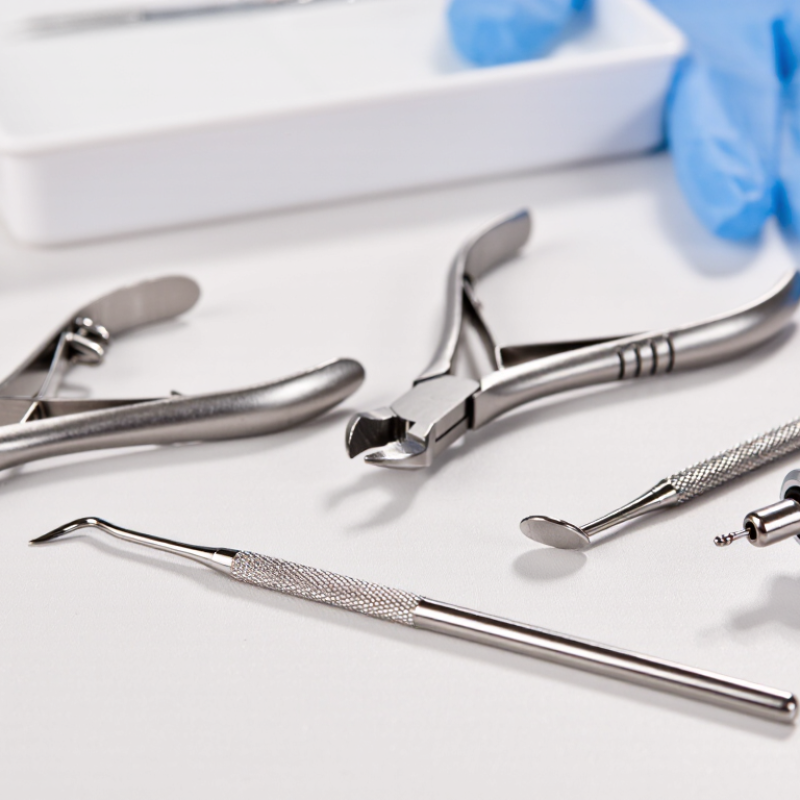
Podiatry nail tools serve specific clinical purposes. Nail nippers can trim thickened or irregular nails, while files smooth rough edges that catch on socks. A curette may help remove loose debris, but it should never be forced beneath the nail. Small details matter. The tool’s size, edge, and grip affect control, comfort, and visibility.
Tool choice follows assessment, not habit. A podiatrist considers nail thickness, shape, nearby skin, pain, and the patient’s medical history. The instruments support care; they do not diagnose a nail condition on their own. Reusable tools require appropriate cleaning and sterilization between patients, while disposable items should be discarded after use.
People with diabetes, reduced sensation, or poor circulation may need especially cautious nail care. A small cut can be difficult to notice, and healing may be slower. In practice, the best instrument is not always obvious at first. Clinicians should reassess if a patient feels discomfort or the nail does not respond as expected, rather than pressing ahead.
Good podiatry nail care depends on matching each instrument to the task. Nail nippers trim thick or curved nails; they should cut cleanly without crushing the plate. A fine file shapes edges and smooths small snags. Curettes can lift debris from beneath the nail, but forceful scraping may injure tender skin. Rotary files help trained clinicians reduce dense nail material. They also create dust, so suitable extraction and eye protection matter. Different tools, different risks.
Reusable instruments need careful cleaning and reprocessing. The CDC’s 2008 Guideline for Disinfection and Sterilization in Healthcare Facilities describes validated reprocessing as essential for reusable medical instruments. A California investigation published in the New England Journal of Medicine documented 110 pedicure customers with boils linked to contaminated footbaths (Winthrop et al., 2002). Footbaths are not nail tools, but the outbreak shows why hygiene cannot be an afterthought. That distinction matters. One practical blind spot is assuming a tool looks clean because no debris is visible. It may not be. Clinicians should follow current professional infection-control procedures and the instrument manufacturer’s reprocessing instructions.
Comparing podiatry nail tools in 2026 starts with the task, not the price. A sturdy nipper may suit thick nails, while a fine curette offers better control around narrow edges. Check the cutting action: the blades should meet evenly without a visible gap. Smooth joints and balanced handles can reduce hand strain during repeated work. Small details matter.
Material and maintenance deserve equal attention. Look for clearly stated material specifications and compatibility with the clinic’s validated cleaning and sterilization process. A polished finish alone does not prove durability. Inspect hinges, tips, and alignment, and ask whether parts can be serviced or replaced. If possible, test the grip with gloves; a handle that feels comfortable bare-handed may slip during a procedure. Comparisons are not always straightforward, because one design rarely suits every clinician or patient.
Tips: Compare tools side by side on control, visibility, and cleaning needs. Record what feels awkward, too. Follow the manufacturer’s care instructions, and choose instruments appropriate to your training and clinical assessment.
For podiatry nail care, reusable nippers and curettes are dependable only when their instructions permit steam sterilization. Choose tools with smooth surfaces and joints that can be opened for cleaning. After each patient, remove visible debris before it dries, then clean, rinse, dry, inspect, and package instruments as directed. A speck beneath a hinge can undermine the whole process. Not glamorous.
The CDC’s Guideline for Disinfection and Sterilization in Healthcare Facilities recommends biological-indicator testing at least weekly, plus testing every load containing implantable devices. It also calls for mechanical and chemical monitoring of each sterilizer load. Keep the cycle record, indicator results, and maintenance dates together; investigate failed indicators rather than simply rerunning a cycle without checking the cause. Follow the sterilizer and instrument manufacturers’ instructions, since cycle settings and compatibility differ.
Maintenance needs close attention, too. Check cutting edges, alignment, corrosion, and loose joints under good light. Dull nippers can crush a nail instead of cutting cleanly, but sharpening and lubrication must suit the instrument’s instructions. A rushed drying step is an easy weakness to overlook. Track repairs and retire tools that remain damaged or cannot be reliably cleaned.
Choosing podiatry nail tools starts with the patient’s condition, nail thickness, and treatment setting. Heavy, curved nails may need sturdy nippers with short, controlled jaws; delicate trimming calls for finer tips. A curette can help clear debris from nail grooves, while a smooth file refines sharp edges. Small details matter: a comfortable grip, clear sightlines, and easy-to-clean surfaces reduce handling errors. Fit matters. No single tool suits every nail, and forceful trimming can injure surrounding skin, especially when sensation or circulation is reduced.
Hygiene is part of tool selection, not an afterthought. The CDC’s 2015 national estimate found that about one in 31 U.S. hospital patients had at least one healthcare-associated infection on a given day. Its sterilization guidance calls for sterilizing critical instruments that enter sterile tissue; clinicians should follow the relevant classification and facility protocol for each instrument. Check hinges for trapped debris and discard tools with pitting or loose joints. A shiny surface alone proves little. For people with diabetes, poor circulation, or recurring ingrown nails, professional assessment is safer than cutting deeply at home. Tool choice should match the task, but the patient’s risk profile must shape the technique too.
Sturdy nail nippers with short jaws can help trim thick or curved nails. Use controlled cuts.
It shapes nail edges and smooths small snags. It is not meant to remove thick layers quickly.
A curette can lift debris from beneath the nail or around its grooves. Forceful scraping may harm tender skin.
Rotary files can reduce dense nail material. They create dust, so suitable extraction and eye protection matter.
The blades should meet evenly, with no visible gap. Check the hinge and tips, too.
No. A shiny surface can be misleading. Inspect for pitting, trapped debris, and loose joints.
Consider nail thickness, the treatment setting, and the patient’s risk profile. No single tool fits every nail.
Cleaning and reprocessing should follow validated procedures and the manufacturer’s instructions. Visible debris is not the only concern.
People with diabetes, poor circulation, or recurring ingrown nails should seek professional assessment before cutting deeply. It can be hard to judge the risk alone.
Choosing the best podiatry nail tools in 2026 starts with understanding their clinical purpose: helping practitioners trim, shape, clean, and assess nails with control and precision. Common options include nail nippers, files, curettes, and specialized instruments for thick or difficult-to-manage nails. The right selection depends on factors such as material quality, grip, balance, durability, and how well each tool suits the task and the practitioner’s technique.
Safety and maintenance are just as important as performance. Tools should be cleaned and sterilized according to appropriate clinical procedures, inspected regularly for damage, and stored to protect their working edges. Matching instruments to individual podiatric needs—including nail thickness, sensitivity, and treatment goals—can support careful, efficient care. A thoughtful comparison of function, handling, and upkeep helps practitioners build a dependable set of tools without choosing instruments that are unsuitable for their patients or routine.