
ManufacturerChoosing arrow point nail cutters for wholesale requires more than comparing unit prices. Buyers need to assess cutting alignment, handle comfort, material, and consistency across production batches. A clean, narrow tip can help with detailed nail work, while a poorly aligned edge may snag or leave an uneven cut. Small differences matter. Ask suppliers for clear product specifications, sample units, and close-up images before placing a large order. Check how the cutters open and close, whether the joint feels stable, and whether the finish shows scratches or rough edges. These practical checks do not guarantee flawless stock, but they can reveal issues early.
This guide outlines the features and sourcing questions that help wholesale buyers make a considered choice. It covers blade shape, construction, finish, packaging, and sample inspection, with attention to the needs of salons, retailers, and distributors. Look for consistent workmanship across multiple samples, not just one polished display piece. Request details about materials and quality-control procedures, and confirm that product descriptions match the items being supplied. Packaging also deserves a closer look: cutters should be protected from rubbing against other tools during transit. There is no single best option for every buyer. A compact cutter may suit a travel kit, while a sturdier handle may feel better during frequent use. Compare the trade-offs, document your checks, and leave room to revise your choice when real feedback arrives.
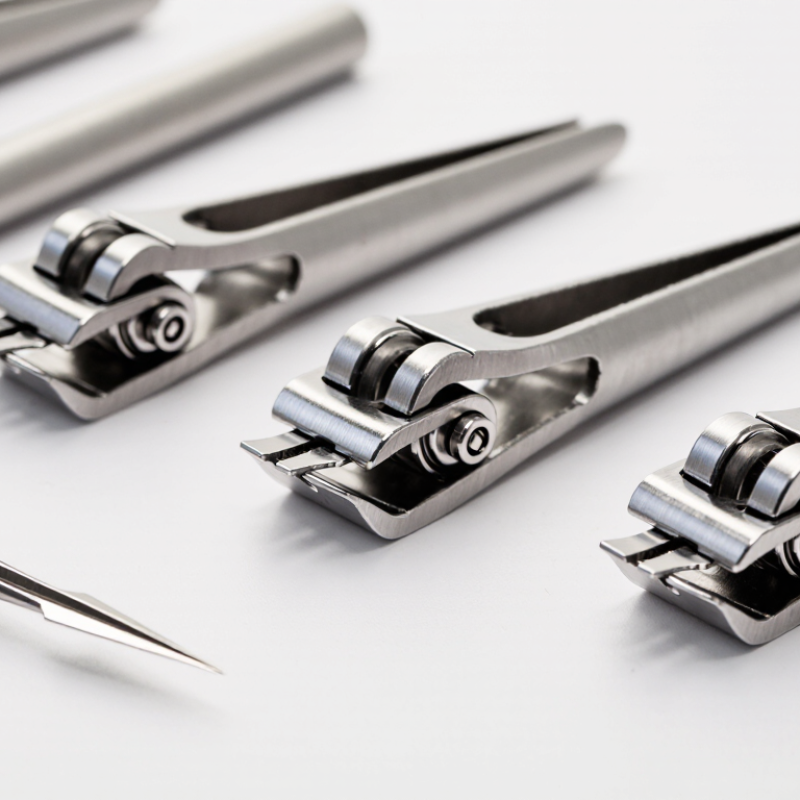
Arrow-point cutters have narrow, tapered jaws that reach nail corners more precisely than broad, straight blades. They suit detailed manicure and pedicure work, including trimming small rough edges. They are not tools for digging into skin. Check that the tips meet evenly, the hinge moves smoothly, and the handles provide a steady grip. A tiny gap at the point can leave a ragged edge. It is easy to miss during a quick sample check.
Market context matters, but it needs careful framing. Grand View Research valued the global nail care market at USD 23.41 billion in 2023 and projected 5.2% annual growth through 2030. This covers nail care broadly, not arrow-point cutters alone. For customs research, HS 8214.20 covers manicure or pedicure sets and instruments under the World Customs Organization’s Harmonized System. The exact tariff line may differ by country and product construction. UN Comtrade’s trade data can help buyers compare reported import values and quantities, though those figures do not confirm a product’s classification.
Tips: Ask suppliers for close-up blade photos and sample-cut tests. Verify alignment under bright light. Check the local tariff schedule before setting landed costs; the code is not a guarantee.
For wholesale buyers, 3Cr13 and 420J2 are both martensitic stainless steels, but neither guarantees a sharper, longer-lasting cutter by name alone. GB/T 1220 lists 3Cr13 at 12–14% chromium and 0.26–0.35% carbon; JIS G 4303 gives SUS420J2 12–14% chromium and 0.26–0.40% carbon. The ranges overlap substantially. That matters. In arrow-point nail cutters, heat treatment, edge geometry, and finishing can affect real-world edge life as much as the grade. ASM Handbook guidance on stainless steels likewise treats hardness and corrosion behavior as dependent on composition and processing, not labels alone.
For edge retention, ask suppliers for finished-blade hardness results and a repeatable cutting test using the same wire, cutting angle, and sample count. A harder edge may stay keen longer, yet can chip if the edge is too thin or brittle. Not always. Corrosion resistance also needs careful comparison: both grades rely on chromium, but neither should be assumed immune to rust after exposure to moisture, salts, or nail-care products. ASTM G48 provides standardized pitting-corrosion test methods, though its results do not automatically predict service life in a salon or retail setting. Request test conditions and results for the actual finished cutter. One limitation remains: published grade data cannot replace side-by-side testing of production samples.
For wholesale buyers, salt-spray results can help compare finishes and identify weak points on arrow point nail cutters. ISO 9227:2022 specifies neutral salt-spray conditions:
50 ± 5 g/L sodium chloride, a chamber temperature of 35 ± 2°C, and solution pH of 6.5–7.2.
These figures describe the test environment, not a guaranteed service life. Small details matter. On a cutter, inspect the pivot, joint edges, and exposed cutting tips, where coating gaps may let corrosion begin.
Ask suppliers for the test method, exposure duration, sample count, and dated photographs—not just a pass statement. The report should identify visible rust by location and distinguish base-metal corrosion from surface staining.
A clean result after a short exposure does not prove long-term durability. Salt spray is a comparative test, not a precise simulation of storage, shipping, or repeated handling. Set acceptance criteria for the intended finish and use, then compare like with like.
One imperfect point: cosmetic judgments can vary between inspectors, so written rating rules help.
Source: ISO 9227:2022, Corrosion tests in artificial atmospheres—Salt spray tests.
Top Arrow Point Nail Cutters for Wholesale Buyers
An incoming inspection plan turns a shipment into a repeatable decision. For arrow point nail cutters, use ISO 2859-1 attribute sampling to check whether units meet defined requirements. Set the lot size, inspection level, and AQL before sampling. Then use the standard’s tables to find the sample size and acceptance numbers. AQL is an indexing value, not a promise that every accepted lot is defect-free.
Define defects in writing. A chipped cutting edge, loose pivot, or rough burr may affect function or handling. Separate major and minor defects, and set acceptance criteria for each category. Some buyers use zero acceptance for safety-critical issues, but that choice needs a clear rationale. Draw units randomly from different cartons, not just the top layer. Small detail. Record the lot, sample count, findings, and decision so another inspector can follow the same process.
Keep the plan consistent, but review it when suppliers, packaging, or defect trends change. Use suitable gauges and a documented check for cutting performance; visual inspection alone can miss poor alignment. ISO sampling helps manage inspection effort, yet it cannot replace process control or careful judgment. And the plan may still miss a rare defect. That is worth remembering.
Example buyer-selected AQL levels for critical, major, and minor defects. These values are preferred AQL levels in ISO 2859-1; the standard does not assign defect categories to specific AQLs. Determine sample size and acceptance/rejection numbers from the applicable lot size, inspection level, and sampling-plan tables.
Wholesale buyers should compare arrow point nail cutters by landed cost, not the quoted unit price alone. Request pricing at the minimum order quantity and at the next price tier. Ask whether a protective cap, individual pouch, or printed carton changes the cost. A lower price can disappoint. I would also check the sample’s hinge alignment and cutting edge before approving a large run.
Packaging affects storage, handling, and shelf presentation. Specify pieces per inner box, units per master carton, carton dimensions, and packing protection. For lead time, separate production days from inspection and transit days. UNCTAD’s Review of Maritime Transport 2024 reports that seaborne trade grew 2.4% in 2023, while noting ongoing route and logistics disruptions. That data is a useful reminder: confirm the shipping schedule and build a buffer rather than treating a factory estimate as a delivery guarantee.
Tips: Ask suppliers to quote the same specifications and delivery terms. Compare total order cost, MOQ, packaging details, and dispatch date in one table. Keep the approved sample and packing specification on file; small differences are easy to miss.
The chamber uses 50 ± 5 g/L sodium chloride, 35 ± 2°C, and solution pH of 6.5–7.2. These describe test conditions, not service life.
Check the pivot, joint edges, and exposed cutting tips. Coating gaps there may let corrosion begin. Small details matter.
Request the test method, exposure duration, sample count, and dated photographs. Ask where rust appeared and whether it affected base metal or surface finish.
No. A short exposure cannot predict years of storage, shipping, or repeated handling. It is mainly a comparison tool.
Define lot size, inspection level, and AQL before sampling. Use the sampling standard’s tables to determine sample size and acceptance numbers.
Check for chipped cutting edges, loose pivots, and rough burrs. Set separate written limits for major and minor defects.
Select units randomly from several cartons, not just the top layer. Record the lot, sample count, findings, and decision.
AQL is an indexing value, not a defect-free guarantee. Sampling may miss rare problems. Visual checks can miss poor alignment, too.
This guide helps wholesale buyers evaluate arrow point nail cutters by focusing on their blade shape, intended uses, and product classification under HS code 821420. It compares 3Cr13 and 420J2 stainless steels in terms of edge retention and corrosion resistance, while explaining how ISO 9227 salt-spray testing can support a consistent assessment of corrosion performance. Buyers can use these factors to compare product suitability for different markets and usage needs.
The guide also outlines a practical approach to incoming quality control using ISO 2859-1 AQL sampling. For purchasing decisions, it recommends comparing suppliers on more than unit price: review minimum order quantities, packaging options, production and shipping lead times, and expected quality standards together. This structured comparison can help wholesale buyers plan orders, manage inspection requirements, and select products that better match their operational needs.