
0%

Choosing the right nail nippers can make grooming cleaner, safer, and more comfortable. However, attractive packaging does not guarantee reliable performance. The best nail nippers should match your nail thickness, hand strength, and intended use. A compact tool may suit travel, while a heavier model offers better control for thick toenails.

This guide explores seven practical tips for making a confident choice. It considers blade sharpness, jaw alignment, handle comfort, spring action, material quality, cleaning, and overall value. Stainless steel is often preferred because it resists corrosion and supports regular sanitation. Still, not every stainless-steel tool performs equally well. Precise construction matters more than a shiny surface.

Look closely at the cutting edges. They should meet evenly, without visible gaps or rough spots. The handles should open smoothly and avoid pinching your fingers. A firm grip helps prevent sudden slips. Small details matter.

Experience also teaches a less obvious lesson: the sharpest nippers are not always the easiest to control. Excessive force can damage the nail or surrounding skin. Even experienced users can rush a cut, especially when the tool feels comfortable. That mistake deserves attention. Clean the nippers before and after use, and never share them without proper disinfection. When choosing between two similar models, consider warranty support and replacement availability. A dependable tool should remain useful beyond its first few manicures. These tips will help you compare products realistically and choose nail nippers with greater confidence.
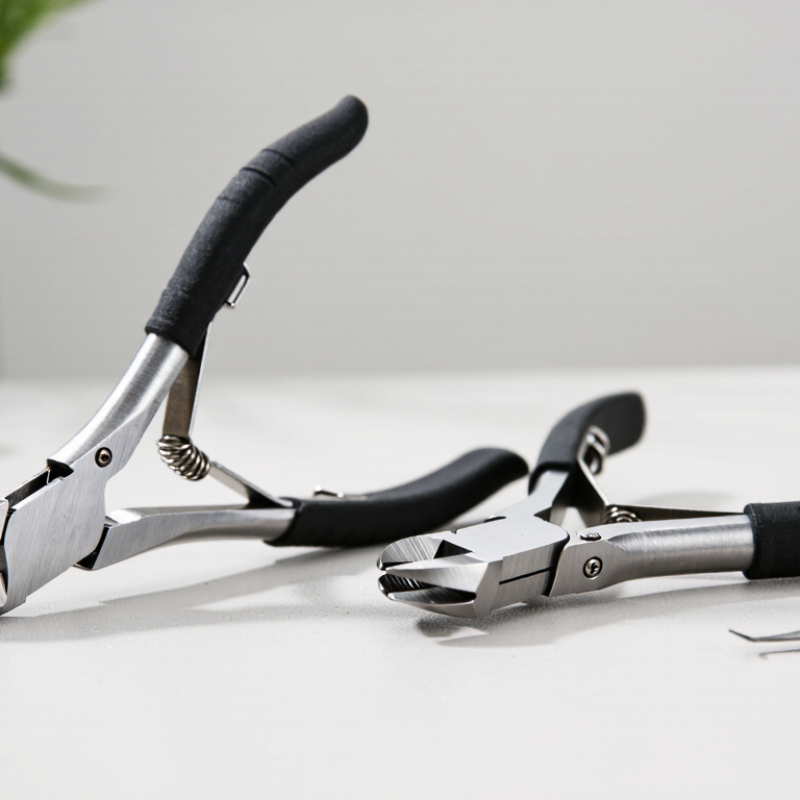
7 Tips to Choose the Best Nail Nippers?

Understand Your Nail Care Needs and Cutting Frequency

Choosing the Best Nail Nippers: Understand Your Nail Care Needs and Cutting Frequency

Your nail routine should guide your nipper choice. If you trim fingernails weekly, choose compact nippers with sharp, narrow jaws. They offer better control around curved edges. For thick toenails, stronger jaws and longer handles may reduce hand strain. Do not force a weak tool through hard nails. That can split the nail or damage nearby skin.

Your cutting frequency matters too. Frequent users should look for corrosion-resistant metal, firm hinges, and handles that do not pinch. Occasional users may prefer a simple, easy-to-clean design. Check that the jaws meet evenly without a visible gap. Uneven blades can crush rather than cut. A textured grip helps when your hands are damp. Small details matter.

Clean the nippers before and after each use, then dry them fully. Never share them without proper disinfection. Cut after bathing, when nails are softer, but avoid cutting too deeply into corners.

I once chose a large tool for convenience and found it less precise around small fingernails. That experience changed my preference. I still sometimes cut too close when rushing. Slow, controlled pressure is safer.

People with diabetes, poor circulation, or recurring nail problems should ask a qualified healthcare professional before trimming thick or damaged nails.

Evaluate Blade Quality, Sharpness, and Cutting Precision

Choosing the best nail nippers starts with the blade, not the handle’s appearance. Grand View Research estimated the global nail care products market at about USD 23.8 billion in 2023, showing strong demand for reliable personal-care tools. Yet market growth does not guarantee cutting accuracy. Inspect the jaws under bright light. They should meet evenly, without visible gaps or twisted edges.

Sharpness matters, but excessive sharpness can feel unstable. A quality blade should cut a nail cleanly with moderate pressure, rather than crushing or splitting its edge. Test gently on a thin nail tip, never on living skin. Listen for a clean, controlled cut. A rough snap suggests poor grinding, misalignment, or weak blade geometry. Not always obvious.

Precision also depends on the hinge. Open and close the nippers slowly. The motion should feel smooth, with no side-to-side wobble. Stainless steel construction can support durability, but steel grade alone proves little; heat treatment and finishing affect edge retention. I once favored a heavier tool, assuming weight meant strength. It actually reduced control around curved toenails. That judgment needed revising.

The American Academy of Dermatology Association advises trimming nails carefully and avoiding aggressive cuticle cutting, which can increase irritation and infection risk. Choose jaws sized for the intended nail area, then check whether the spring returns consistently. Small details matter. Clean cuts, stable alignment, and predictable pressure are stronger quality signals than polished packaging.

7 Tips to Choose the Best Nail Nippers? – Evaluate Blade Quality, Sharpness, and Cutting Precision

Tip Evaluation Dimension Recommended Standard How to Check Warning Signs
1 Blade Material Look for hardened stainless steel, preferably with corrosion resistance and a durable cutting edge. Review the material specification and inspect the blades for an even finish, smooth surfaces, and no visible pitting. Unspecified metal, surface rust, discoloration, rough grinding marks, or visible gaps between the blades.
2 Blade Sharpness The cutting edges should meet cleanly and cut with light, controlled pressure rather than crushing or pulling. Test on a thin piece of clean paper or a suitable nail-tip sample. A sharp edge should produce a clean cut without snagging. Tearing, bending, repeated cuts, excessive force, or a rough and uneven cut line.
3 Cutting Precision Choose a narrow, accurately aligned jaw for controlled trimming around corners and cuticles. Close the jaws slowly and check whether the tips meet evenly from heel to point without crossing. Misaligned tips, uneven contact, a large opening at the point, or blades that overlap during closure.
4 Jaw Size and Shape A jaw length of approximately 4–8 mm is suitable for many detailed nail-trimming tasks; larger jaws suit thicker nails. Match the jaw profile to the job: compact jaws for precision and wider jaws for stronger cuts on thicker nails. The tool blocks the view, cannot reach corners, or requires excessive hand pressure.
5 Handle Comfort and Leverage Handles should open and close smoothly, provide a secure grip, and allow gradual pressure control. Perform several opening and closing cycles. Check that the spring returns consistently and the handles do not pinch the fingers. Stiff movement, loose handles, a weak spring, sharp handle edges, or discomfort after repeated use.
6 Hinge Smoothness The central joint should move smoothly with minimal side-to-side play and maintain alignment during use. Hold the tool closed and gently move the handles sideways. Then open it slowly to feel for consistent resistance. Grinding sounds, wobbling, uneven resistance, visible looseness, or a hinge that sticks.
7 Maintenance and Safety Select a nipper that can be cleaned, disinfected, dried, and stored safely without damaging the blade. Confirm care instructions, use an appropriate disinfectant, dry the joint, and store the tool with a protective cap or closed jaws. No care guidance, hard-to-clean crevices, exposed sharp tips, or materials that react poorly to routine disinfection.

Practical selection rule: Prioritize clean blade alignment and controlled cutting performance over decorative finishes. Always disinfect tools according to applicable hygiene requirements and use them only for their intended purpose.

Choose the Right Size, Handle Design, and Grip Comfort

Choosing nail nippers starts with size, not appearance. A compact 9–10 cm tool usually offers better control for fingernails and narrow edges. Larger 11–13 cm nippers provide more leverage for thick toenails, but they may feel awkward in smaller hands. Test the jaws before buying. They should meet evenly without forcing your thumb.

Handle design changes cutting accuracy. Curved handles can follow the palm, while straight handles allow more deliberate finger placement. A matte, textured surface helps when hands are slightly damp. Soft grips may feel comfortable, yet overly thick handles can reduce control. That fit matters. Your fingers should close naturally, without pressing the joints into sharp edges. In my own use, a shorter handle felt precise at first, but caused fatigue during repeated trimming. I had underestimated leverage.

Ergonomics deserve attention because nail care is a growing consumer category. Grand View Research estimated the global nail care products market at about 21.9 billion US dollars in 2022, with continued growth forecast through 2030. Fortune Business Insights also reported a multibillion-dollar nail care market and steady expansion in its recent analysis. These figures do not prove that expensive nippers perform better. They do show why comfort and usability deserve careful testing. Choose stainless steel for easier cleaning, but inspect the hinge and spring alignment. A smooth opening action matters more than decorative packaging. Small details matter.

Check Material Durability, Safety Features, and Hygiene

7 Tips to Choose the Best Nail Nippers

Tip 1: Check the material. High-quality stainless steel resists rust, but “stainless” does not guarantee strength. Look for firm jaws, smooth edges, and no visible pitting.

Tip 2: Test durability. Open and close the nippers slowly. The hinge should feel stable, not loose or gritty.

Tip 3: Inspect the cutting alignment. Uneven jaws can crush nails instead of cutting them cleanly. I once trusted a polished finish too quickly; appearance is not proof of performance.

Tip 4: Prioritize safety features. Choose rounded outer edges, controlled spring tension, and a secure locking mechanism. The handles should remain comfortable during repeated use.

Tip 5: Match the tool to the task. A smaller jaw offers better control for thin nails, while a stronger jaw suits thicker nails. Excessive force increases slipping risk. Keep fingers away from the cutting line.

Tip 6: Plan for hygiene. The CDC’s Guideline for Disinfection and Sterilization states that cleaning must come before disinfection. Remove nail debris from the hinge and jaws with detergent, then use a compatible disinfectant.

Tip 7: Dry completely. Moisture trapped near the pivot encourages corrosion. WHO’s 2009 hand-hygiene guideline recommends washing for 40–60 seconds when soap and water are needed. For shared tools, personal ownership is safer. Disinfect every time. Don’t skip the hinge.

Compare Maintenance Requirements, Brand Reliability, and Price

7 Tips to Choose the Best Nail Nippers?

Choosing nail nippers is less about a shiny finish than daily control. In my salon kit, the best pair opens smoothly and cuts without crushing the nail edge.

Jaw alignment
Handle comfort
Hinge tension
Cutting sharpness
Steel quality
Maintenance needs
Total price

Hold the tool before buying, if possible. The handles should meet without pinching skin. Keep them dry. A tight hinge can feel reassuring, but excessive resistance causes hand fatigue.

After each use, brush away filings and wipe the jaws with a suitable disinfectant. Follow the maker’s care instructions carefully.

Add a small amount of approved lubricant when the hinge begins to squeak. Store the nippers in a dry case, not loose beside damp towels.

I once ignored a stiff hinge and pressed harder; the cut became uneven. That mistake reminded me that maintenance affects safety and precision.

Reliable tools usually have clear material details, consistent customer feedback, and accessible warranty information.

Price needs a wider view.

A cheap pair may require sharpening or replacement after several months. A costly pair is not automatically better. Compare the purchase price with expected service life, sharpening costs, and replacement support.

Check whether the jaws stay aligned after repeated use. Read detailed reviews, not only star ratings. Look for comments about rust, loose joints, and cutting performance.

Price matters. So does consistency. My own judgment has changed after trying tools that looked excellent but felt awkward during real work.

FAQS

How should I choose nail nippers for fingernails?

Choose compact nippers with sharp, narrow jaws. They provide better control around curved nail edges.

What type of nippers suit thick toenails?

Use stronger jaws and longer handles. They may reduce hand strain, but do not force weak tools.

How often should I replace or inspect nail nippers?

Frequent users should inspect them regularly. Check the hinge, grip, blade alignment, and signs of corrosion.

How can I tell whether the blades are properly aligned?

Hold the jaws under bright light. They should meet evenly, without gaps, twisting, or crushed edges.

What does a clean cut feel and sound like?

A good blade cuts with moderate pressure. It should feel controlled and make a clean, brief sound.

How can I test nipper sharpness safely?

Test gently on a thin nail tip. Never test sharpness on living skin.

Why does the hinge matter?

A smooth hinge improves control. Avoid nippers that wobble, stick, or open unevenly.

Should heavier nail nippers be considered better?

Not always. Excess weight can reduce precision around curved toenails. I once assumed weight meant strength, but that judgment needed revising.

When is the best time to trim nails?

Trim after bathing, when nails are softer. Cut slowly and avoid going deeply into the corners.

How should nail nippers be cleaned and stored?

Clean them before and after use, then dry them fully. Do not share them without proper disinfection.

What grip features are useful during nail care?

A textured grip helps when hands are damp. Handles should also feel stable and should not pinch.

Who should seek professional advice before trimming difficult nails?

People with diabetes, poor circulation, or recurring nail problems should consult a qualified healthcare professional. Thick, damaged nails can be difficult to manage safely.

Conclusion

Choosing the right nail nippers begins with understanding your nail care needs, including how often you trim and whether you need a tool for regular maintenance or thicker nails. Look for high-quality, sharp blades that meet cleanly and provide precise cuts without crushing or splitting the nail. The size and handle design should suit your hand, while a comfortable, non-slip grip can improve control and reduce strain during use.

Durability, safety, and hygiene are also essential considerations. Strong, corrosion-resistant materials can support long-term use, while smooth edges, secure construction, and protective features help prevent accidental injury. Choose nail nippers that are easy to clean, dry, and maintain, and consider how often the blades may need adjustment or replacement. Finally, compare overall value by balancing performance, comfort, durability, maintenance needs, and price rather than focusing only on the lowest cost.

Alexander

Alexander

Alexander is a professional marketing specialist dedicated to helping businesses understand products, markets, and customer needs through clear, practical, and trustworthy communication. With strong expertise in the company’s product portfolio, he regularly researches industry developments,......